Camp Hemingway
By Robert L. Penick
They were out in the woods by the Fox River because a literary lion had fished there, then wrote about it. They were out there, two adjunct professors, getting strafed and bitten by every type of black fly and brown tick, plus numerous pests of varied and unknown species and genus. They were having a grand time, but it had only been four hours since they had unloaded the Subaru and set up camp. The tent was pitched and the fire circle was outlined with creek rock. Snatchko, the Ph.D. candidate, read from a nature manual.
“Poison Ivy is easily identified by its three-leaf configuration, similar to the hog peanut, but with a brutal bite.”
“That may have been what you pulled up from around your camp chair,” Barstow, the MFA lecturer, commented. They had brought two quarts of Puerto Rican rum and a five-liter box of burgundy. Neither one of them was proficient at drinking, but their choice of libations was historically sound. They sampled the rum, gagged, then drank earnestly from the burgundy. The world spun crazily and they knew they had found Papa’s secret, the key to pulling the marrow from life. Around nightfall, Snatchko took his new fly rod out and soon had his line caught on the far shore. Wading into the current, he fell over and had to be rescued by his colleague. They built a fire hoping to keep the mosquitos away and talked of the things men talk about when stupidly drunk.
When he awoke, Barstow was dehydrated and hyperthermic. Snatchko lay near the water, in the sun, perhaps dead. Barstow envied him. Walking on stiffened legs, he made for the car and the two gods it contained: aspirin and air conditioning.
Thoughts of a book were already forming.
A Jarring Point of View
By Steven Whitaker
Smugness lounged across Steven Whitaker’s face as he tilted back in his office chair. This would be something to volley back at his damned brother. So much arrogance because of a string of publications on some bullshit ezine. It was pathetic.
Tilting back in the understairs cupboard of his mother’s house was a perilous venture, and the back of the chair unbalanced a leaning mop, which he thrashed at when the handle met his head.
A final check on his laptop was complete. This would be his first publication in Brilliant Flash Fiction. It had to be. It was brilliant.
He should have been published more, obviously, but there was probably some personal conspiracy against him. Whatever. They couldn’t deny this one.
After a more cautious, awkward manoeuvre in the cramped space, Steven peeled the seal off the bottle of Remy Martin he’d been saving, and poured. A smile of supreme satisfaction erupted as he clicked send.
***
Pathetic, pathetic, pathetic!
OK, yes, my story got published by Brilliant Flash Fiction. But I couldn’t have a minute to bask, could I?
As soon as I’d told my family, mister-bloody-perfect-brother chose to announce a deal he’d struck with The New Yorker for regular contributions. Well, la-di-da.
It wouldn’t have mattered to wait a week before announcing that. The next day, even, just to grant me a smidgen of limelight. But noooo, no, no, no.
‘Oh, come on, Steve. The family’s all gathered anyway, so why not have a double celebration?’ Then it was all ‘heartfelt apologies’, trying to pretend it was an accident that spilled out in the excitement. It was all so fake, but everybody believed it, as usual, so I looked like the bad guy, as usual.
And then the clincher, ‘I’ll even take us all out for dinner, so there’s no hard feelings, Steve.’ Now I look cheap as well as petty. I’m not petty. He’s the petty one. And I’m sick of him calling me Steve as well. Trying to sound like we’re so close when he knows I prefer Steven. He probably wouldn’t even care if I died.
I mean, of course I’m proud of my brother, but …
But, how am I supposed to … even …
GOD!
***
Many years later …
Lower Gittingfold Gazette – Obituaries
Whitaker, Steve
Passed away an old bachelor after a long battle with illness. Funeral at 10:30am, 28th June, St. Joseph’s Church.
Steve was also the brother of noted writer and local celebrity Oscar Whitaker. Oscar’s latest and touchingly titled upcoming novel, A Brother to Die for, will be available for purchase on 27th June. A brief signing session will take place 30 minutes before the funeral, and another session an hour afterwards. Tasteful attire is politely requested of fans to help Oscar navigate his grief.
Glass Sister
By Christy Hartman
I sniff the yellowed paper, covered with my shaky, second-grade printing—O-Nay Ick-Say Ids-Kay Lowed-Alay. Not a trace remains of the blueberry-scented marker.
The sign was pointless—Katie can’t climb—but I liked knowing it was there, stuck to the treehouse wall with a glob of Hubba Bubba, telling the old oak that this was my special place.
I sit on the railing; freshly pedicured toes tingle in the evening breeze. The glare of the bright kitchen lights swallow the stars.
My uncut grocery-store cake taunts me through the kitchen window—pink roses and thirteen unlit candles. Katie had another one of her ‘episodes’ during dinner. Dad wipes lasagna off the kitchen floor while Mom disappears upstairs with Katie—to bathe her fragile body, wrap her in a warmed towel, assure her she did nothing wrong—that I wasn’t mad.
The opening tssst of my stolen garage-fridge beer echoes through the big yard, sound bouncing off the trampoline, absorbed by the swimming pool. The bitter bubbles tear at my throat like glass shards.
The freshly mowed grass below looks pillowy soft. I’d probably only shatter an arm—maybe a leg. If I didn’t make a sound, how long would it take for someone to find me?
Katie’s shrieks, battling with Mom’s soothing words, drift through an open window.
The house lights flick off, revealing a glittering blanket of stars.
I fix my eyes on the brightest one and let go.
Happy birthday to me.
Cracks
By Elodie A. Roy
They both have children from previous marriages. Lynn’s daughter is eight. Adam has a ten-year old son and a seven-year-old daughter. At weekends he drives them to places. It amazes him that Lynn should know so little of the region she is from. Adam, who was born in Australia, is drawn to the dark, gothic soul of the Northeast of England. He likes damp, mouldy, softly decaying buildings. St Paul’s Monastery in Jarrow. Tynemouth Priory—its gentle, subdued majesty. Ruins are for him a source of great wonder because they exist in a state of formlessness, of indecision—suspended between life and death.
Adam is a widower and Lynn a divorcee: their distinct civic status has seeped into their views of life. He feels he is forever wrestling against fate, unfree, the toy of some greater entity, likely to be crushed at any moment. He quietly waits for catastrophes. She, on the contrary, is a great believer in self-determination. She thinks one can decide, influence the course of events. She believes in second chances. One year or so ago, it was she who first approached Adam, sensing in his brokenness a desire to become whole again.
Adam’s son delights in ruins as other children love the sea. The boy runs and plays in the rubble, his small body bent over stones, slowly digging around them with a stick, fondling them or trying to lift them as if he wanted to take them home.
Lynn stays behind with the two girls tugging at her clothes, pulling her arms, asking for crisps and chocolate. She looks around, shivering. She likes the ruins too, though she feels she doesn’t like them as much as she ought to. To her these places all seem cold and alike. There is no kinship between her inner state and the harsh, endless landscape of the past. She doesn’t belong there. Her mind wanders. She longs to be home, somewhere safe and warm, reading by the fire, cooking, or making love.
She absently stares at her partner. She sees him in the distance—kneeling beside the boy, whispering in his ear, patting his small head. The pair of them—content, absorbed in their element. The boy excitedly rising, waving his arms, suddenly running towards the girls with shrieks of delight—how happy he looks then.
On the drive home, Lynn feels cramped, sitting in the back of the car between the two girls. The boy always sits in the front, and in that moment she hates him for it. At the same time, she feels ashamed of wanting to take his place—a place she feels ought to be hers by right: next to the man she loves. Or, even better, behind the wheel, driving them all to warmth, safety, wholeness. But this won’t happen. There isn’t enough room. Lynn’s heart revolts at the revelation and, sitting between the silent, sleepy-eyed girls, her own body fully alert, she begins travelling on another journey.
DOLLS AND ACTION FIGURES
By Danielle Ellis
When I was ten, I decided to become someone different. Before, I was obsessed with peanut butter and jelly sandwiches, and any cartoon with animals, and playing with dolls who fell in love with action figures. Daddy left to work abroad so I couldn’t watch him watch football but I had to love it like he did. Momma started spending time with a coworker and I heard them talking about how much they hated pasta so I decided to love it for Daddy’s sake. I bought a football so I could practice all day even though girls don’t play football but at least I was gone like Daddy always was.
When I turned twenty, I decided to become a nomad. Momma had a grave because Daddy couldn’t keep his hands to himself even though the coworker disappeared and Daddy never knew about it. The coroner called it an accident and after the funeral I would lie awake every night and think about pasta and football and how unhappy Momma had been and that the coworker was the only one who made her smile. So I took the car I inherited and left pasta and football behind at a home I refused to revisit and traveled the states like Momma always wanted to. Stopping long enough to earn a few bucks and shove down gas station pizza and snacks and wonder if Momma had hated the person I became.
When I turned thirty, my child decided I was a parent. Ryan was into rock music and health food and I became a fitness junkie and vegetable connoisseur. I worked in retail and stayed with one company in one city in one relationship with one child. A beautiful child. A smart child. A child who was inquisitive and thoughtful and never lonely because I was always there even when Ryan refused to come home because I had pissed him off somehow.
When I turned forty, Ryan decided I was a single mother. I decided my daughter would never see me cry the way my mother had. I smiled at my daughter’s little antics and answered all her questions and helped her research answers I didn’t know. I went back to peanut butter and jelly sandwiches and discovered anime and started drawing cartoons with animals and watched my daughter play with dolls who fell in love with action figures.
Reunion
By Terrye Turpin
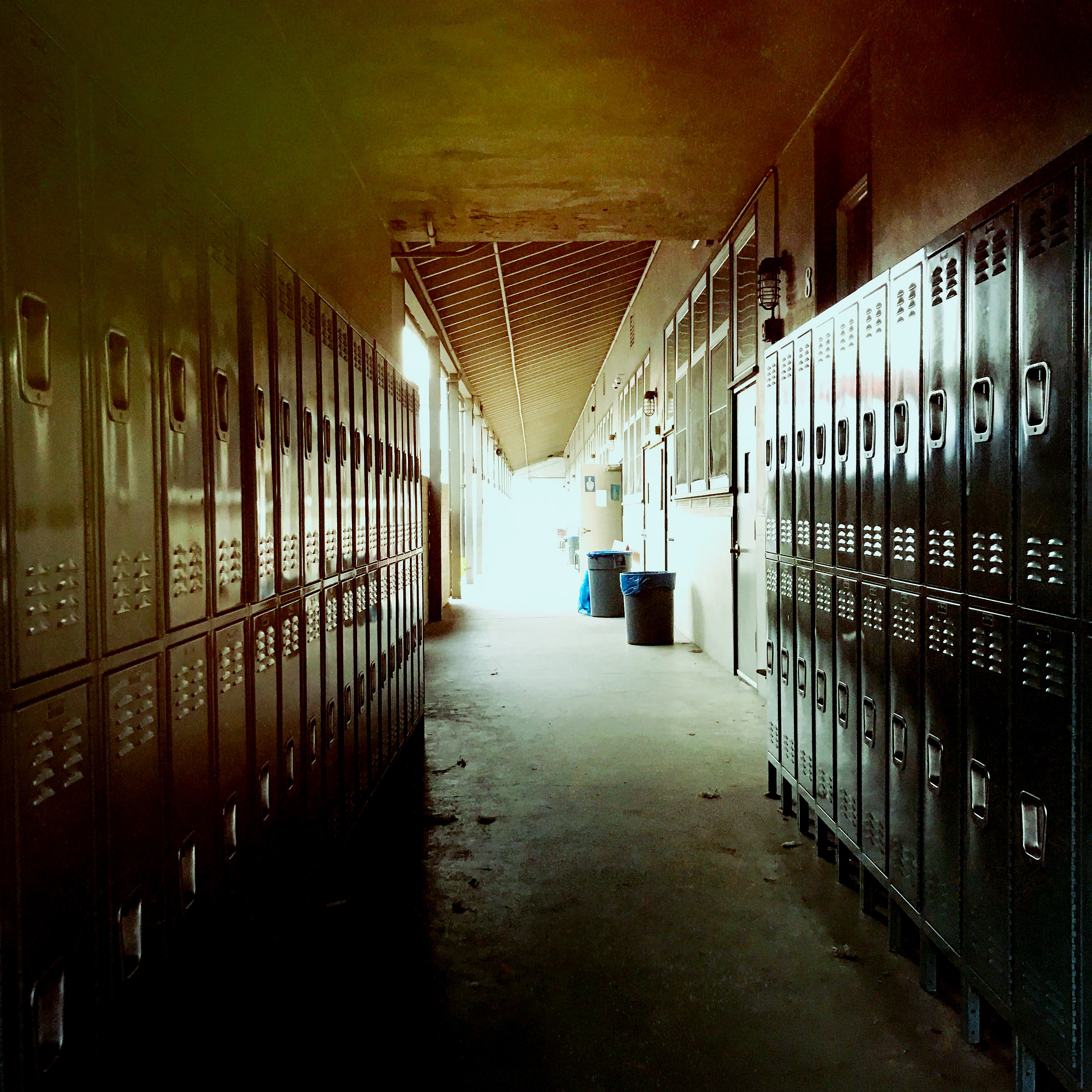
I open my email and scroll past a black-and-white photo—stone lions crouching at a high school entrance. Recollection rings like the end of day bell. Rushing from locker to class, brushing past people who don’t see me, don’t feel me. I inhale the scent of rubber-soled shoes on a waxed gym floor. My arms sag, heavy with books sharp against my chest. Thirty years unravel, an unruly thread.
The invitation, sent from a name I’m supposed to recognize, gradually slides down my inbox, behind offers for car repairs and notices of bills now due. That high school has long emptied of anyone I care to see again. Ghosts linger like clouds of chalk dust and wander empty halls that echo with phantom footsteps. They climb the stands and cheer for games now played only in memory.
That evening, I mention the reunion to Mark, my husband.
“Thirty years is big. Are we going?” he asks.
I shrug. “I don’t think so.”
I log onto Facebook and find the reunion group. Former students have posted pictures. Squinting at the images, I try to reconcile the faces with those captured in the yearbooks in my bookcase.
I request to join the group. A week later, the group admin replies and asks, “Who are you?”
In high school, she had sat next to me in Algebra class. After searching through my email, I find and delete the invitation.
Months later, on a slow Sunday, Mark and I drive past a building marked for demolition. Broken windows cast blank stares. A shadow flickers like a waving hand, and somewhere inside I imagine a bell ringing. I tell my husband, “I went to school there. I think.”
Bumper Stickers
By David Waters
We were awakened pre-dawn by the dog retching. I grabbed his collar, pulled him down the stairs, through the kitchen, and out the sliding door, where he took up a position under the only automatic spotlight that still functioned. There he barfed. We knew these episodes were psychogenic. We had taken him to the vet in November when it first started. Anxiety, she said, he picks up on your feelings. Almost everyone’s dog has been throwing up since the election. Since it only happened rarely, she thought none of us needed meds.
The weather report denied that it was raining, but the heavy mist ensured that if you were in it, you were wet. The clouds scuttled so low that I kept my head down. Only in San Francisco. It was mid-April, after a winter of steady rain interspersed with downpours. It felt like punishment, yet we hadn’t done anything. Not that we weren’t capable of it. I hauled my naked ass inside and found my robe.
“Hey Cass, the Dow opened down a thousand,” was Jez’s cheery good morning. Jezebel wasn’t her given name. Who would name their child that? Jez had been a regular Jennifer until she read about Queen Jezebel in her Middle Eastern History class. When the queen learned her enemies were on their way to kill her, she dressed in her royal finery, including her six-inch bejeweled Monolos, Jez insisted, and applied her make-up with a steady hand. She faced them bravely. They threw her out of a high window. Her body splattered on the cobblestones and stray dogs ate her. History slandered her reputation. Jez wanted to be that brave.
We had vowed not to follow politics closely now that the new Dark Age had begun. Jez was cheating. She claimed she was educating the downtrodden, not shitposting. She said her tweets had to be inflammatory to get noticed, and that she had a thousand followers to show for it.
“ICE’s gonna grab you and fly you to El Salvador.”
“Can I use my miles to upgrade to business?” Jez didn’t have any miles, but she was brave. There we sat, two lezzies in tattered rainbow bathrobes sipping our coffees. The gray dawn light revealed that the windows needed cleaning. We clung to our cups with both hands as if they were life-preservers and we were floating in an oil slick over a sea of sharks. Just another grisly metaphor conjured up to pass the days. Dog-who-had-just-puked clamored for his breakfast.
“Feels like prison already,” Jez grumped, “Gotta take to the streets, like they did in the seventies. Burn the whole motherfucker down.”
“Lotta good that’ll do. Just give them an excuse to bring in the military.”
We looked at each other solemnly. A mauve curl hung down over Jez’s left eye, sexy as hell, I thought. But then I gulped because the same conclusion hit us simultaneously. Blam!
“It’s time to go,” we whispered in unison.
We had made plans. It was 918 miles from San Francisco to the British Columbia border. The day before we had scrubbed the bumper on our vintage Subaru of political stickers. This wasn’t the moment to trumpet our beliefs. We had pulled the dog’s bed from the back seat and sat cross-legged on it with the bumper at eye level. The dog had muscled his way between us. We suddenly realized that the bumper, with its crusts of rust, was our history, our photo album.
Scraping off the stickers was like pulling little bits of truth off our hearts. “We Stand with Hilary” went first. She had always made us uneasy. Underneath her was a Google sticker proclaiming, “Don’t Be Evil.” Jez and I had met working at Google back in the aughts. How naïve we had been! We smiled at “Be Kind to Animals Don’t Eat Them” as it bit the dust. I lobbied to keep “Obama HOPE” and Jez was partial to “I’m So Gay I Can’t Even Drive Straight” because I had gifted her that after a fender-bender. When we got to “Love Who You Want Be Who You Are” we sideways hugged and snuffled, sitting there in the damp garage. Dad had given me that one after I came out to my parents and before he passed away. He would be horrified to see what was happening now. It took two hours but we removed all twenty of them. We sat there quietly, listening to the rain plink on the tin roof, accepting random dog licks to our faces. We had remembered who we were, if there had ever been any doubt.
“Hey, Cassandra, how about a prophecy?” Jez almost never asked for one. Yes, my full first name is Cassandra. It used to be Audry, but I changed it years ago. I was no more an Audry than I was a heterosexual. My predictions often turned out to be correct, but no one ever believed me.
I stood up next to the old Subaru, closed my eyes, and in my strange prophecy voice intoned, “We will find a house on the beach in Tofino for the summer, flip-flops, cut-off jeans, veggie burgers, fries with vinegar, Moosehead lager, awesome sunsets, the dog off-leash running with his pack, space to breathe and write.” I paused, then added, “Move to Vancouver when the Pacific winter storms began to roll in, live off our Google money.”
“I never expected Cassandra to be so optimistic.” Jez looked soothed.
I was a dual citizen, born in Saskatchewan in the seventies. My Canadian passport was so fresh it smelled of government ink. We had stocked up on edibles, one kind for car-sick dogs and another for sleepless, horny, peri-menopausal women. We had lined up a renter, a tech bro with a life-sized robo-sex doll with whom he slept and possibly also conversed.
We could work from anywhere. We were poets. We were ready to go.
We loved our country, and wondered if we would ever come back.
The World’s Greatest Patient
By Gareth Vieira
My therapist had a small office with soft lighting and a degree on the wall that looked like it had survived a flood. He wore slightly too-large sweaters, wire-frame glasses that slid down his nose, and had the careful, apologetic posture of a man who had spent his life trying not to take up too much space. There was something quietly hopeful about him, like he still believed his work mattered in a pure way, like every new client might finally be the one that proved it. The first thing I noticed wasn’t his voice or his questions, it was how badly I wanted him to succeed. Not me. Him. I didn’t want help. I wanted him to feel like he was good at helping.
Every session became a quiet performance. He would lean forward, nod slowly, say things like, “And how does that land for you?” and I would think, Don’t let this man down. I laughed at the right moments. I reflected on cue. I handed him clean, well-wrapped feelings like little gifts. You could almost hear the applause track in my head.
When he suggested hypnosis, I didn’t ask why. I thought, This is his big finale.
He spoke in that calm, confident way people use when they’re about to make something dramatic happen. I closed my eyes like a good student. He counted. I drifted. At some point I started crying, real tears, shaking shoulders, the kind of crying that convinces a room you’ve just solved your life. He looked stunned. Triumphant. Like a magician watching a dove rise from an empty sleeve.
“This is a breakthrough,” he said.
I nodded through the tears, thinking, Nailed it. You did great, buddy.
We wrapped up. I wished him a good week.
Then I got in my car, stared at the steering wheel, and said out loud, “What the fuck is wrong with me?”
I hadn’t been healed. I hadn’t been helped. I had simply become the most encouraging audience member a man in a soft chair had ever known. If therapy is never truly successful, then I still gave him the performance of his career. Somewhere out there, he probably tells people about the day he hypnotized a man into a brand-new life.
A Silence of Rings
By John Francis Istel
Juliet burps and I lose my place in Dante’s Inferno. It’s after one in the morning in Butler Library’s stately study hall, the only building open on Columbia’s campus. We sit across from each other at a huge table in a neat forest row of oak tables. She swallows her burp and the ensuing silence looms like crickets. I’m waiting until she burps again. She burps about every thirty seconds.
Juliet turns the page of a biography of Magellan. Without pause she uncaps her bottle of Maalox and swigs the pasty white liquid like a drunk draining a brown paper bag outside the Blue Marlin. She continues reading, leisurely screwing the top back on and returning the antacid to her black leather carry-all, slipping it amid her candy-cane-colored muffler, her Diet Coke and her autographed pictures of Lassie.
“What?” She notices I’m watching her. She pushes her glasses back up the slope of her thin nose and shakes her black hair back over her shoulders.
The silence mushrooms, warm and intoxicating. Somewhere in the seventh circle, amid the Cardinals and archbishops becoming trees and flowering, I find myself on a Broadway sidewalk, creeping toward a low sound of a samba band, and as I sneak up to the corner to watch the encroaching parade, an elephant triumphs, bugling as it stomps rings around me. Then, I’m in the Los Angeles airport amid weary holiday travelers, the steady drone of standby announcements, and the images of captured Afghani fighters on the gate’s TV sets. In the jet, I understand my mission is to parachute into my childhood home and I land on that windy night in 8th grade when, alone in bed, I heard a ghost or the creaking of my mother, tipsy and unsteady in the dark—I prefer to believe in ghosts—and the tall thin pine outside my bedroom window started knocking against the side of our shingled house.
I startle to find the knocking is Juliet’s boot heel chattering against the marble floor. But I am planning my fire escape down the pine tree’s sappy bark when my sister brings me her headless Barbie to fix. I announce that we are leaving in five minutes. But where, oh where, are we going, Billy, she sings. Then her tune becomes Barry Manilow’s Copa, Copacabana, which cocoons in my mind like unwanted Styrofoam peanuts that I can’t shake off. The melody snakes off and a small series of burps, swallowed in quick succession, brings me back to Butler’s fluorescent glare. I quickly open a notebook to scribble down my dream flight. The clock over the Maps & Atlases reads 1:35 a.m. We’re practically the last students left.
Finished with Magellan, Juliet heaves her Riverside edition of Shakespeare’s collected works onto the table. She opens to a bookmarked page and begins covering text with one hand while resting her weight on her other forearm, a cat purring into a fish tank with closed eyes. As she memorizes lines, she seems to be praying for gifts or graces that her faith promised would be delivered. She flips her hand up to reveal her progress with her fiery-footed steeds. She has an audition for a Shakespeare festival tomorrow.
Oh Juliet, my one-time sun, with her coral gummy-bear lips, brow knotted in caterpillar furrows! Twenty years later, I remember trying to wake from all that dreaming. Or was I the butterfly and Juliet the dream? What if I just now awoke and 20 years passed and she was bringing my wife and I baby shower presents? We’d chuckle over our Sunday crossword puzzle mornings and her caramel con leche angel food cake and the skiing trip when my car broke down in the Rockies. She almost turned blue in the red flashing of the hazard lights, great gobs of shivers convulsing her, and all I could manage was, “Shhh, everything’s going to be fine.”
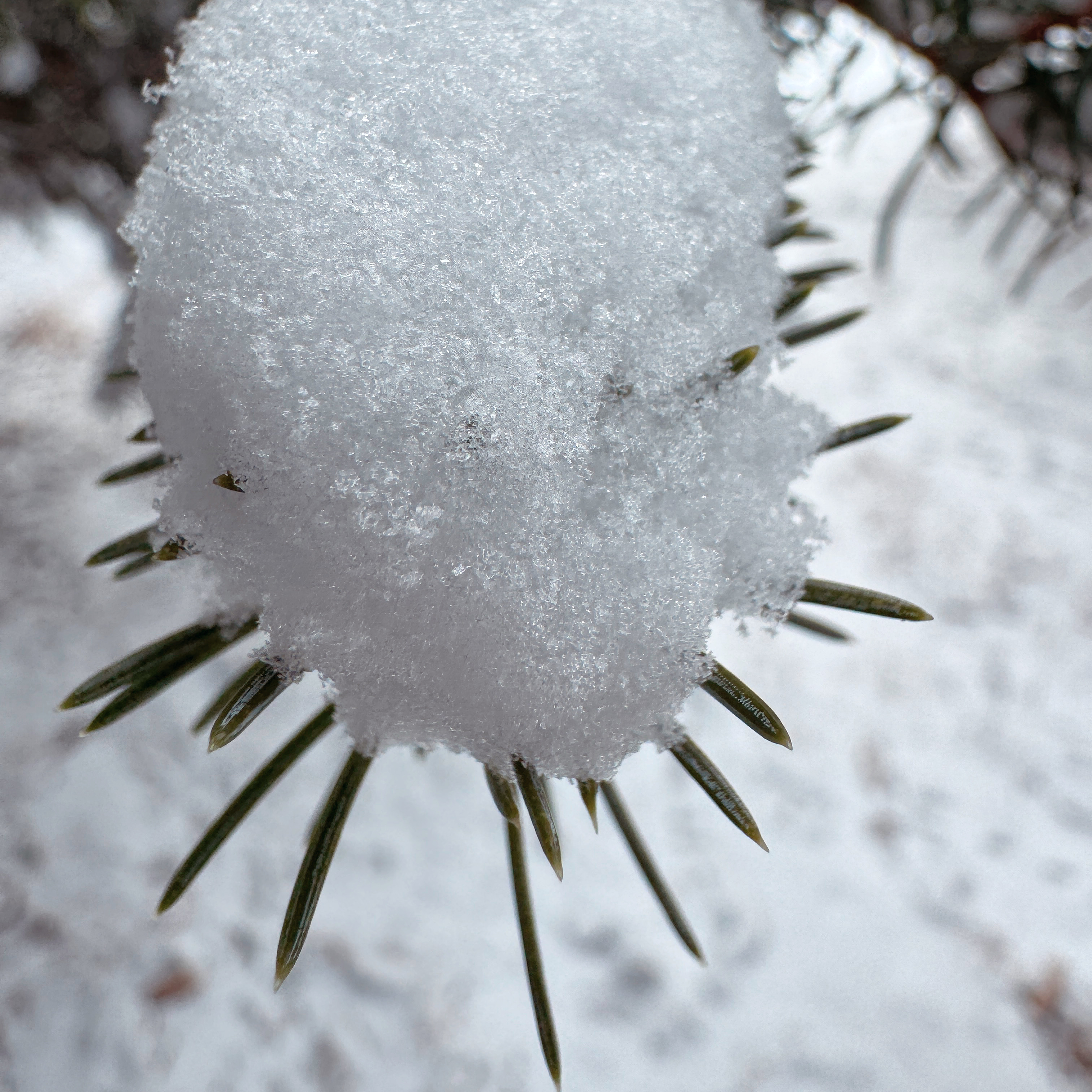
On a mountain top, blankets of snow muffle sound and you feel that if you just listened hard enough the trees would speak their biographies of rings. Our eventual break-up before graduation was quiet like that, the real conversation never spoken aloud, but the sound was the soft separation of a snow clump cleaving from a pine tree’s branch, the soft landing, snow on snow, the sound your heart makes when it’s finally broken.
It’s the same silence as the quiet hall at home, leading past my sisters’ rooms, to the back bedroom where my stepfather slept, next to the cellar door where trunks full of opera costumes moldered and grew dank. Near the closet and the coat rack under which our cat birthed eight kittens—all undiscovered until at supper one night, between puffs of Mom’s cigarettes, someone heard the faint mewing amid the galoshes. Maybe that’s what memory sounds like.
Juliet closes her volume of Shakespeare, and the security guard clumps by and announces it’s 2 a.m. “Time to vamoose,” he says, holding his accordion of keys tight to his belt so they won’t jangle or further disturb the ending of a new day.
ELLE IS PAPER
By Katrina Megson
I keep my eyes closed, not ready to look in the mirror. When I take a deep breath there’s a newspapery rustle. Okay then, I have to see …
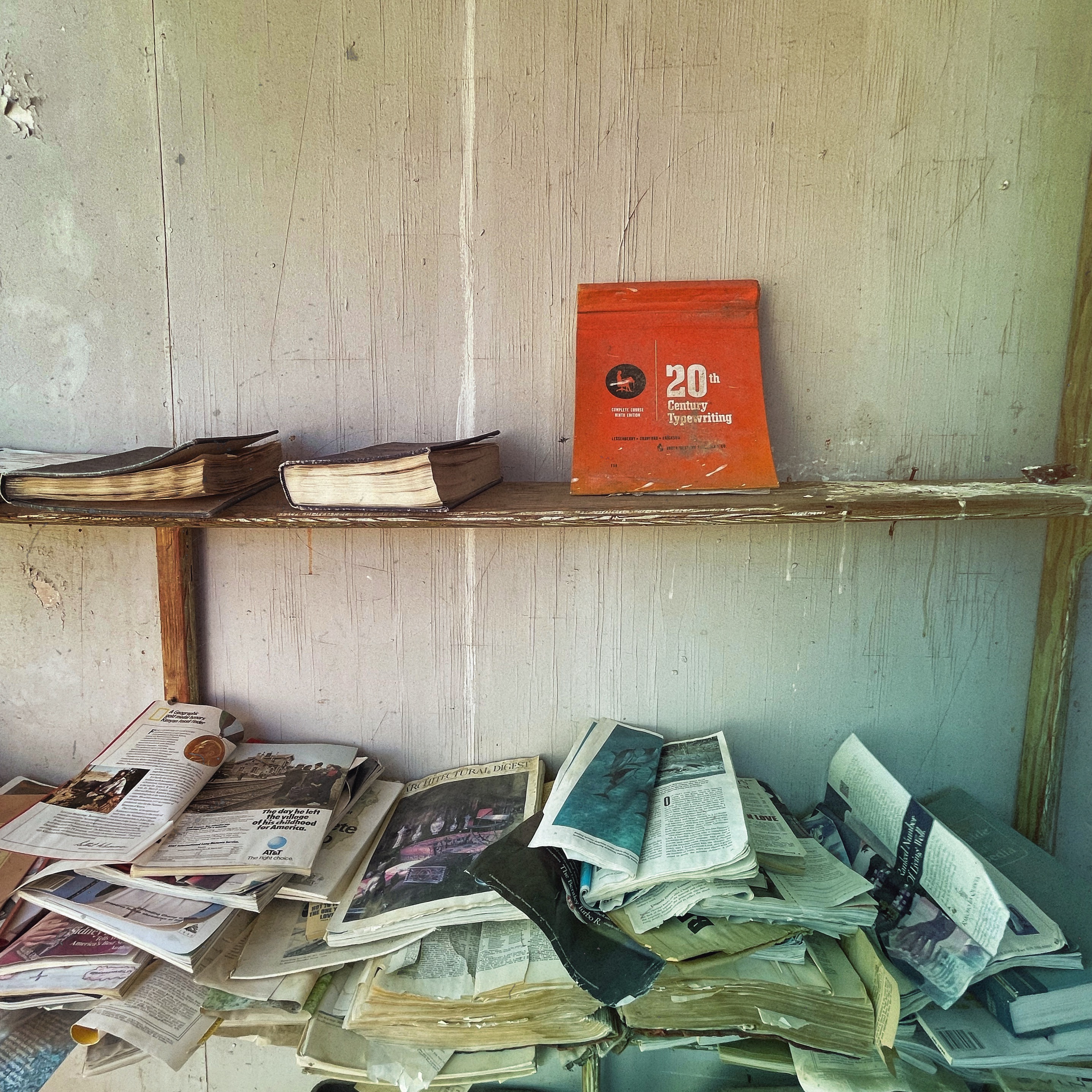
Wow! For the first time I can read sentences on my skin; little snippet descriptions of makeup, holiday ideas and clothes. But it’s not just little black letters printed on me: colourful captions and headlines run down my shoulders and, faintly across my chest, the figure of a woman pouting in dramatic makeup and a yellow outfit. I think she was on Strictly.
It’s Day Five, and there’s no bloody denying it. I’m turning into a magazine!
I wiggle in front of the mirror trying to see my back. It’s funny to feel relieved about being half-woman-half-magazine. I’d been convinced that I was becoming newspaper; that Marie had somehow hexed me into a copy of The Guardian whilst she was away. Oooh … there’s definitely something printed beneath my shoulder blades; a model’s face and a bottle. Looks like the perfume advert I’ve seen on the back covers of magazines this month.
Okay, Elle, work this out … I found the stain on my fingers on Tuesday, Day One. It looked like newspaper ink, but I haven’t read a newspaper all week. The papergirl’s been bringing Marie’s Guardian every morning (swear we’re the only couple under forty that get newspapers delivered), but I’ve just been leaving the papers on her side of the bed, crumpling the pages a bit to fake that I’ve been keeping up with the news.
Marie says I should read the newspaper more, “instead of all those trashy magazines, with their reductive, anti-women crap!”. Which magazines does she think I read? I do buy Vogue, and Cosmopolitan sometimes. (And my secret subscription to Elle magazine, because we share a name.) It was the magazine beauty pages I turned to for advice and cleanser samples to get the newspaper ink off my hands. Nothing worked and it got worse throughout the day. By bedtime the little grey marks spread past my wrists. The following day I found letters covering both my arms, making tiny spots. They seemed higgledy-piggledy and didn’t join up with each other, not then. I should’ve Facetimed someone: Marie, my mum, a dermatologist … I can’t now, with my glossy magaziney face covered in print.
My voice has gone funny too. It’s hard to open my mouth and my lips and my tongue are sticky and inky. God! I must have *inside* pages. Someone could open my cover and flick through me! What would that feel like? Would my reader realise Magazine Me was looking back at her?
I’ve not been outside since Thursday: sunshine was lovely and a walk cleared my head. But people started looking at me funny and I worried that a dozy commuter would mistake me for a copy of the Metro or some other newspaper, tuck me under their arm, then leave me folded up on the bus. So I’ve stayed in bed, immersing myself in my fashion magazines. Maybe that’s why I’m turning into a magazine rather than a newspaper; printed with clothes and makeup and glossy colours, not depressing black and white newspaper stories.
I’m probably going mad. Hmm, would it be better to be a madwoman who thinks she’s turned into a magazine, or to actually be a magazine? Tomorrow, when Marie finds me here, would I rather be sectioned or recycled? Hospital or binbag?
It’s getting faster. I’m more magazine than woman now. My legs feel flimsy as newspaper, and I know they’ll crumple at any minute! Suddenly, I really need to know which magazine I am. I don’t want Marie thinking I read Take-a-Break or Closer. I want to be a copy of Vogue or an independent magazine. As I flop to the floor onto Marie’s newspapers, the last thing I see is ‘ELLE’, a palindrome, in mirror writing across my forehead.
That’s when I remember this month’s issue hadn’t arrived ’til now. I’m Elle. June’s Elle magazine.
It’s quite restful, lying here amongst the papers. Not moving, except when a draught flutters the corners of my pages. Not thinking, except imagining my articles and photospreads. I lose track of time, until I hear a key in the lock and Marie call, “Elle! I’m back? You in?”.
From my papery perspective I see Marie’s comfy travelling sneakers and leggings stepping towards me, and her huge wheelie case against the wardrobe. Sitting on the edge of the bed, her jetlagged face looks down, and her giant, pink-tipped fingers reach towards me to grab a Guardian …
But instead, *I’m* in Marie’s hands, lifted in the air, light as paper. Alone in our flat, she thinks, my girlfriend smiles happily, licks her finger, and flicks to my Contents page.
 BRILLIANT FLASH FICTION