Elmwood
By Dirk Kortz
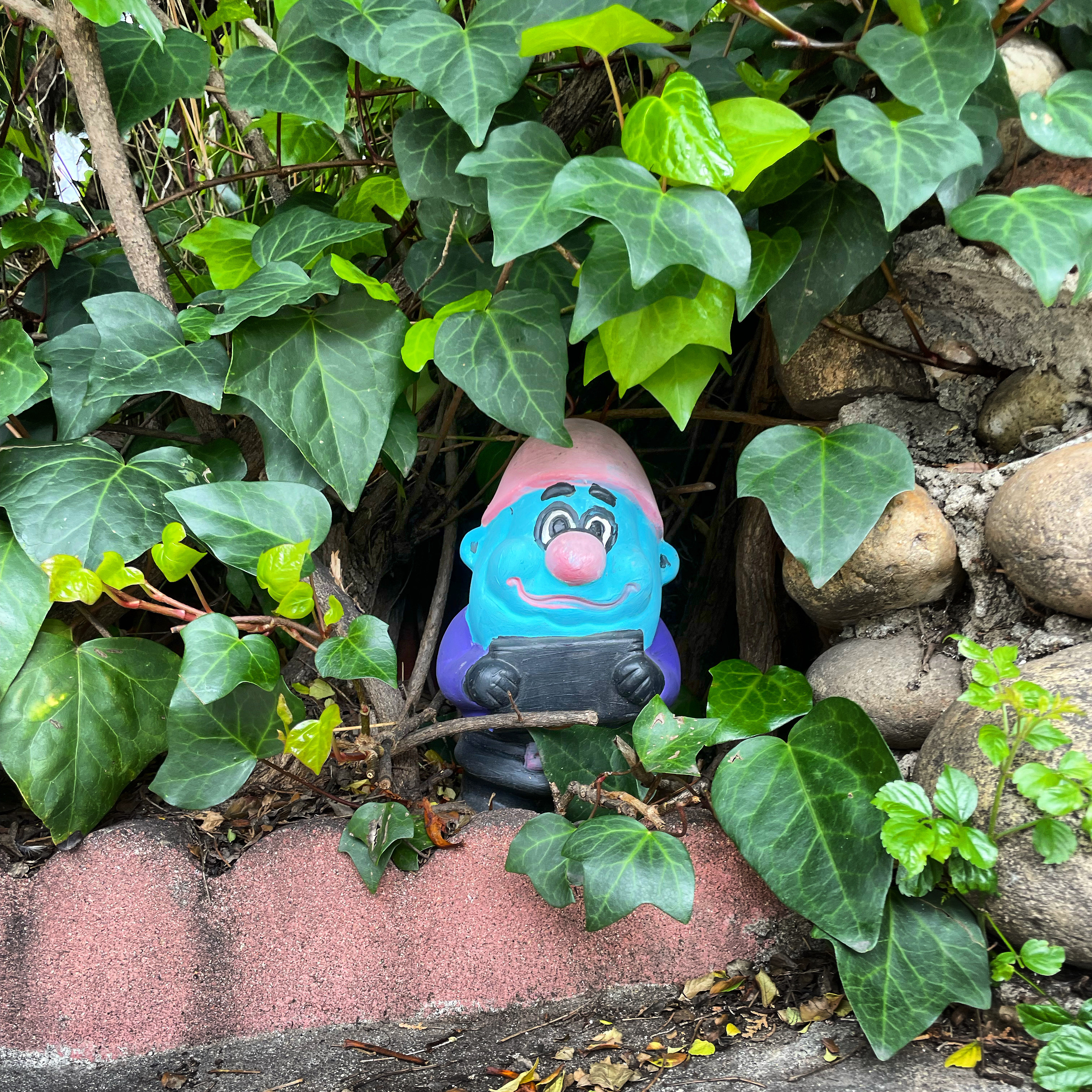
Elmwood was the kind of neighborhood where the homeowners took their garden gnomes and lawn jockeys seriously. I was a renter and didn’t pay much attention to the lawn or garden. My landlord didn’t seem to mind but he didn’t live nearby and some of the folks who did were less understanding. I had been living there for a couple of weeks when my northside neighbor, Mrs. Oswald, came over with a pound cake to welcome me to the neighborhood and, in the process, make a few indirect references to my negligence (such as noting that dandelions are “vile intruders”). My southside neighbor, Mr. Delaney, made his comments over the backyard fence; jolly encouragement that he soon realized was wasted on a man who did not understand the importance of yard ornaments, irrigation systems, and bug spray. The Bentleys, who lived across the street, pointedly ignored my wave whenever we happened to step out to pick up the morning paper at the same time.
After a few mildly threatening notes in my mailbox, the neighborhood seemed to settle into a resentful silence toward me. However, when a garden gnome and two lawn jockeys disappeared from properties on our block, it was no surprise that I immediately became the prime suspect.
Several more notes arrived in the mailbox, less mild in tone than the previous ones and someone chalked “Release the Hostages” on the sidewalk in front of my house. Of course, I was innocent, but I had begun to feel the strain of social ostracism. In a gesture of neighborliness, I pulled some of the weeds from around my mailbox, but no one seemed to notice.
For several days, the letters to the editor in the morning paper were exclusively devoted to the theft with the general tone being one of outrage. I couldn’t help feeling somewhat stung when one writer referred to a “certain nameless but well-known outside provocateur.” Another writer suggested that the kidnapping of the “Elmwood Three” was the biggest affront to the community since the widow Dempsey painted her mailbox orange and was subsequently sent upstate to a rest home by her children.
A week later, I felt I was publicly exonerated when the paper printed a photo that had been sent from Nova Scotia showing the gnome and lawn jockeys together on a rocky outcropping above the sea with fishing poles attached to them. Two weeks later, my innocence seemed even more obvious when a front-page article appeared, accompanied by photos of the threesome wearing berets in front of the Eiffel Tower, in the dining room of a barge on the Rhine with steins of beer before them, and perched on a crumbling wall below the Acropolis with cameras and guide books.
Certain now that my neighbors knew their suspicion of me had been unjustified, I felt that perhaps I might be due some apologies. However, no apologies were forthcoming.
Two weeks later, the stolen items reappeared in their former places on the lawns.
Although I had been coming and going from my house and job every day, occasionally strolling the neighborhood in the evening and shopping regularly at the local market several times a week, I realized how little observable facts mattered once an idea had taken hold in a small community when Mr. Hardin, the manager of the market, asked me if I had enjoyed my recent journey to foreign lands.
It was the first time in many weeks that anyone in the neighborhood had spoken to me, and I was so moved by this small gesture of sociability that I assured him that I had had a wonderful time in spite of the inconvenience of carrying some extra baggage.
Singular Things
By Alethea Paul
It’s January, it’s overcast, and the sky is threatening. It feels cold enough for snow, and I’m praying it is. Rain would run right through these clothes and I’d freeze.
Not sure anyone would notice if I did. Everyone just moves from one place to the next. No smiles, no pleasantries, no eye contact. You just get subsumed, swarmed and swallowed by the masses making their way down dull, gray streets. They don’t look at me like I’m a person. We don’t act like people. We’re more like debris floating in gutters, occasionally colliding on our way out to sea.
I bump into them, ask them for change, or food. Hell, I’d take stained, secondhand clothes off their backs if they’d give it. But either my face or my words repel them faster than the drizzle that runs off their fancy jackets marked by expensive logos. I’m supposed to see they have money and be impressed, not ask for it.
But I’ve long been hungry enough to forget about what I’m ‘not supposed to’ do. I ask a man with a tan, one that suggests he’s been someplace far away and sunny, if he has anything to spare. He fumbles for his car door. Says he has to go before it rains.
I’d love to do the same.
As he climbs inside, a single glove falls to the road. It must have been stuck between his seat and the door, forgotten and wedged in the places in between until thrust out on the street. I pick it up, wave it at him. I know he sees it, sees me, but he drives off like neither exist.
It’s such a waste. I inspect it, seeking some sign or reason for its abandonment, expecting some hole or stain that had permeated its thread that could not be washed away. But it’s just a glove. It can still warm a hand. It deserves better than to be cluttering the gutters and sewers until swept out to sea.
I put it on as the skies open up. Each drop drunk in by the fabric, spreading damp and cold, until it is one dark stain.
Aren’t we a pair? Two discarded, singular things.
Milking Cows with the Man I Loved
By Hannah Wyatt
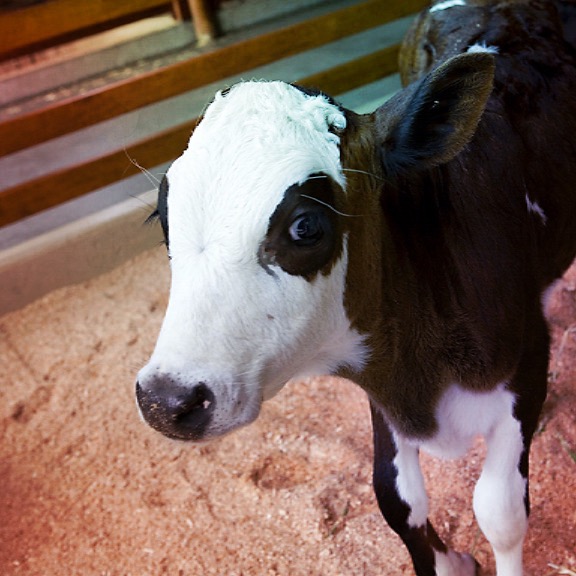
When I loved him, we milked cows together. He told me their teats couldn’t feel it after so many years, while he held them in his grasp, told me about their four stomach compartments and compared them to whales. He told me he’d dreamt of climbing into one of their carcasses and taking a nap.
The first time we did it, milked cows, we had just come from Italian dinner, spaghetti bolognese. I was wiping the beef and shaved carrot from my chin. Now just why did you have to order that? he asked me, with where we were headed for our post-dinner-activity. It was a surprise he didn’t want to ruin, but still, he found my choice in entree somewhat obscene, though I couldn’t have known what would come next.
After our meal, the December air was cold enough to burn. He drove us to the hundred acres of farmland near the university. We wound around the potholed esses of the county route, which was shouldered by the naked stalks of Queen Anne’s lace and elderberry brush.
His best friend Steven worked in the barns there, shoveled cowpies and filled the troughs with slop for seasonal money when we were on break from the semester.
The man I loved had a fascination with bovine, so Steven let him come and watch him whenever he was working. That first night the man I loved took me there was our first real date, and once school resumed in January, he decided to start working there, too, just so he could get onto the farm and keep seeing the cows whenever he wanted, and so he could keep taking me.
I wondered why he couldn’t have had an obsession with some other kind of farm life, like evergreens. If it had been a Christmas tree farm, we could have spent those seven months together falling out of love while taking axes to Douglas firs, bringing them home to his studio apartment by the river to dress them in tinsel and strung popcorn over holiday break. We could have kept going back for more trees and repeated the holiday again and again with a different tree every time, until we’d overstayed the tradition and hated it forever. But that’s not how it happened. Instead, we fell out of love hunched over squat wooden stools, our fingers pressed around the udders of those cows whose eyes I couldn’t bring myself to look into.
It wasn’t the milking that killed the love I had for him. Nor was it the udders, or the milk itself. It wasn’t the smell of shit and grass that clung to me, even after I showered.
Those things were a kind of catalyst, but the love dwindled gradually throughout the spring semester. The more I learned about his attachment to those creatures, the more I understood that my love for him was no more than an assignation of mesmerism to the man I thought he could be. A percentage of the love waned when I saw him lie on his back beneath a cow called Sophie to milk her, just slid under her as though he was working on the undercarriage of a sedan, the air steaming with the warmth of her insides. A percentage of the love waned after the third or fourth conversation we had in which I told him that I dreamed of being an old woman and still able to run laps around the block at dusk, under the evening moon, and he said that he couldn’t begin to imagine why that should be a dream of mine, to be an old woman, why I should want so little.
A percentage of the love disappeared when I could not understand, after half a year, how the sagging parts of those cows meant so much to him—that he spent more time fondling them, talking to them in a hushed voice, than he ever did with me.
He wasn’t gross. He was just possibly a little too fond of cows, and I even thought at the time that it was nothing a good therapist couldn’t sort out. He wasn’t disgusting, but he didn’t understand me either. And that combination became something very hard for me to love. By the time spring had ended, and May turned to June, then July, nothing was really left.
I tried to tell him it was over, but he seemed to have already known, or maybe he’d already shared that feeling, so much so that he believed it to be true without a word. So the last time I watched him milk a cow, and I told him that—that it was over—beneath the slatted light of the barn, awful smell around us, he didn’t cry, and he didn’t falter. He tugged and tugged, and tugged.
Sweet Release
By Tracy Royce
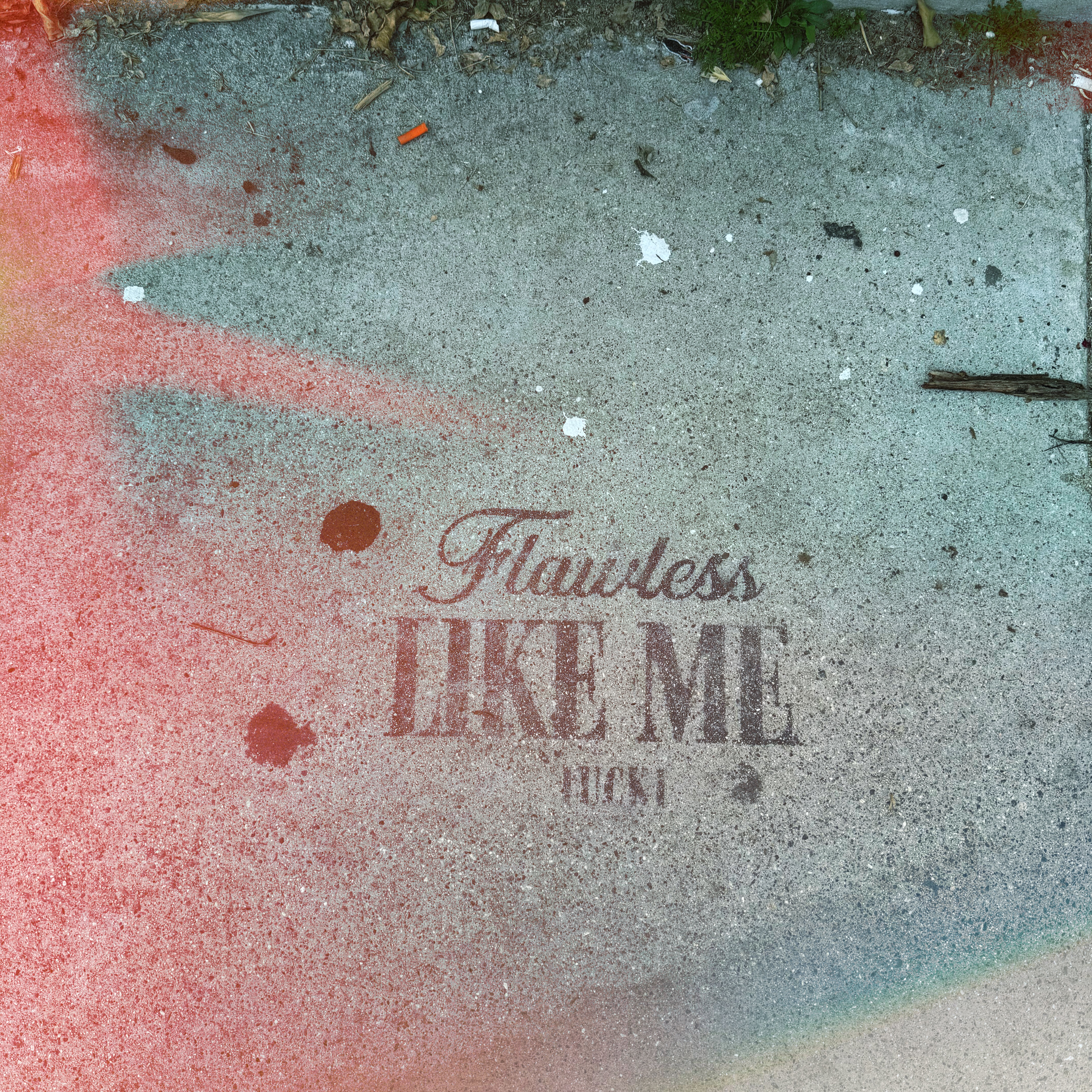
Laughter erupts as Jen and I advance along the path. The guys call this narrow strip of concrete in front of their frat “the runway” because they’ve decided we’re all pageant contestants. Naturally, they are the judges.
This afternoon there are three out front, lounging with drinks, swilling and spilling. Armed with the scorecards they’ve made using sheets of cardboard. Each features a scrawled number ranging from one to ten. Jen and I know what’s to come, but we walk by anyway because it’s the most efficient route to the south campus science labs. And today, we too are prepared. It’s discount donut day, and we each hold a pink cardboard box, warm and fragrant. We exchange smiles of anticipation. Today we indulge ourselves.
“Hey look, it’s the Thunder Thigh Twins,” the loudest guy says. Amid guffaws, they all lift their cards. The scoring is universal: we big girls rate a 1.
The guys high five. Like they did last week, when Jen had to walk alone because I was down with the flu. She’d returned to our room ashen. They’d called her the usual animal names but had also taken videos while they taunted her. Not that these guys are slender themselves. Their boozing is paying dividends at the waistline.
Now Jen and I approach, strutting, allowing our bodies to sway and bounce as we untuck the tabs on our donut boxes. The guys are aiming their phones with one hand and waving their scorecards with the other. “Piggy at the trough,” the loudest one exclaims as Jen selects a squishy jelly-filled pastry from her box. But then he’s wearing it, red goo dripping down onto what used to be pristine kicks.
And before he can utter any expletives, I follow up, a Boston cream exploding against his buddy’s crotch. I’ve creamed his jeans.
Jen and I laugh as we reach into our boxes. We are in sync. Like when we played softball in high school. The pastries fly, as the guys drop their phones and hide behind their scorecards. They hold them up to block the barrage, a large 1 in front of each stupefied face as they dodge the assault. Jen pitches a chocolate glazed that slams into the loudest guy’s card, leaving a sticky circular residue beside the 1. The card now reads: 1O. “That’s right! We’re tens! Perfect as we are. Don’t forget it,” we yell as we pelt them with everything we’ve got. Jen sidearms an éclair and I chuck a cruller and for a moment before they hit their targets, the pastries seem to align alongside one another, two digits dancing in the air.
The Arrival of the Borzingeans
By David L. Updike
Rightly or wrongly, I associate my first love with the arrival of the Borzingeans. That these two events coincided in time is indisputable; any other connections between the two are perhaps products of my own imagination, coupled with the well-known tendency of our species to place ourselves at the center of the universe.
The facts are these: On the night of August 13, 1988, sometime around midnight, Gary Owens and I peeled away from the keg party at the place we all called “the Pit”—really just a sinkhole in the woods—and found a secluded clearing where we lay on our backs in the tufted grass and gazed up at the stars for what felt like a very long time. There happened to be a meteor shower that night, so we saw many shooting stars, including one giant fireball that cut the sky in two, its shimmering purple tail lighting the tops of the trees as it streaked toward the east.
“That one was for us,” said Gary as he slid his hand over mine. We turned toward each other, finding lips, tongues, teeth, skin, muscle, and bone.
This may not seem like such a big deal now, but in those days—at least where we grew up—it was not okay for two guys to get together. That’s one thing that’s changed for the better since the arrival of the Borzingeans. At the time, though, it felt risky in ways that were both exciting and terrifying. Gary and I had been circling around this for months, or maybe it was just me circling around Gary, but I was still surprised when we had come to an unspoken agreement to wander away from the party, and even more surprised to find myself in his arms beneath a sky that was showering us with stars.
When we parted for the night, he whispered in my ear that he loved me.
I walked home wrapped in the warmth of those words. Crossing the dew-damp lawn, I saw that every light in my family’s house was on. This wasn’t at all normal, as my Calvinist parents were generally in bed and asleep by eleven. Many a night that summer I’d snuck in late (though never this late), tiptoed up the stairs, and climbed into bed, and this was all I longed for at that moment. Instead, I saw a showdown ahead that was likely to alter the course of my life. I was still scrambling to concoct a cover story—what to admit, what to deny—as I let myself in.
Mom and Dad were seated on the couch, glued to the television, which was turned up louder than usual, so that they didn’t even hear me enter. I wondered if I could just sneak past them and head upstairs, but then Mom looked up and said, “Oh, Connor, it’s you. Come, sit down.”
“They’re here, son,” said Dad, as though we’d been expecting company and now “they” had arrived.
“Who’s here?” I asked.
“We don’t know yet,” said Mom. She patted the couch beside her, and I went and sat between the two of them.
I don’t have to tell you what we saw on the television. Or how, in my memory of that night, there is already a Borzingean in the room with us. How its pink-orange body slides over the arm of the sofa and across our laps, leaving a trail of irridescent slime, while the domed tips of its prehensile horns gently prod our faces, necks, and arms. How its prismatic eye records and refracts everything, while on the screen we watch hundreds of thousands of its kind descend upon us. How First Contact becomes the only truly shared human experience in our long and troubled history. How, without a single word exchanged, we come to realize that the Borzingeans have always already been here, offering us their gentle comfort and benign wisdom. How we’re just a little better off for this—though perhaps not enough, ultimately, to save us from ourselves.
The rest, as they say, is history, if that word still means anything. The Borzingeans would tell us that these are just things that happen, that we are microorganisms paddling around in the Petrie dish of time. They would put it more eruditely, of course, not being bound by our clumsy, lumbering language.
Here are things that happen: Gary ends up being a total jerk who is using me as part of an exploratory “phase” he’s going through. He dumps me for a girl in our English class, then tells everyone that I tried to seduce him. I retreat into my shell and remain there until college, where, in a distant city, I find my tribe and reinvent myself as a queer theater kid. In my shyness, I gravitate toward the tech side and become a lighting designer for off-Broadway productions. This is always what I will have done, and I would not want it any other way.
Like you, I now have two sets of memories—or rather, I have memories and shadow-memories. Sometimes, looking down at the stage from the control booth, I reimagine that night in 1988 when everything changed. In my memory of it, there is a third with Gary and me in that field beneath the stars, its amorphous form sliding across our prone bodies, its pliable flesh filling the spaces between us. But I also know this isn’t possible. There was a before and after; there was a time when we were alone. And, if I take an eraser to that memory, subtract what I know could not have been there, I can reconstruct the exact moment it all changed.
You see, I wished upon that falling star. I wished upon it hard. I wished to know, and to be known, and, above all, to not be alone.
But there I go, putting myself at the center of the universe again.
The Five Most Memorable Gardens in the Galaxy
By Samuel Cromwell
1. The Garden of a Hundred Paths
Once this moon-sized garden had a hundred paths; now it is near infinite. Imagine a space caught between reality and dream, where statues wander, the spray of fountains spell ephemeral messages in the air, and flowers compose their own gentle music. This is Voya d’Oste, or the Garden of the Hundred Paths, the most breathtaking and painstaking of Yalta’s Third Renaissance gardens. It was built for the Bronze King, as a story with a hundred beginnings but no end, in which the visitors themselves become the protagonists.
The labyrinth of its branching paths, terraces, tunnels, and hydraulic platforms is all arranged to become a narrative, a story created by the traveler’s choices. It was here I met my wife-to-be; we chanced upon each other where two paths joined at a fountain.
“Looks like our stories have crossed,” Fayla said.
“Fate or chance?” I asked.
You decide, dear reader, if you are lucky enough to enjoy one of these hundred paths.
2. The Parras Prohadach Garden
A secret for 10,000 years, this private paradise was first built for Emperor Tsirok the Second, founder of the Dream Dynasty. The garden is nestled behind the Dream Palace, hidden by eddies of fog that coil around the mountain cliffs. Its many outlooks, pavilions, and rockeries were the only places Emperor Tsirok’s harem were allowed outside. Their world was forever isolated, fog-wreathed, cultivated. To this day, the countless varieties of flowers nurtured within the walls of Parras Prohadach carry a ghost of ancient sorrow; their beauty was, long ago, the edge of a prison.
Here, in the shadow of an alcove, Fayla beckoned. She crouched before a dormant flower, watching as pale moonbeams slid across its unfurling petals, and with delicate whispers she told me that the Nightblush only blooms under the kiss of all three moons.
It was this garden that taught me the beauty of secrecy.
3. The Garden of Living Histories
An allegorical landscape-tale, this garden rotates in ten-year cycles as a living history of a lost civilization. Through annuals, perennials, evergreens, various hues of gravel and gradually eroding water features, the myths of a civilization are modeled in verdure. As fields of plants grow and die, they symbolize the rise and fall of nations, their heroes morphing into monsters, their climactic battles depicted as crimson petals strewn by autumn winds.
We lived next to this garden for the full ten years of its cycle. We watched the same flowers sprout again, each time as a different element in a mythic mosaic. I realized our arguments were the same; they died only to regrow in a different season, returning with new shapes but familiar thorns.
4. Wek Wek War Cemetery
Wek Wek commemorates the fallen forces of the Golden Alliance of the Fourth Galactic War. It is also the galaxy’s largest garden, comprising the entirety of a Class III planet. During the conflict, it was a storehouse for munitions, but after the Firstlight Pact, its factories were razed, and the production of plasma-cells was replaced by the planting of seeds. Featuring hundreds of mausoleums, tombs, leaf-vein poetry, and obituaries of cloudwork that scroll through the atmosphere, this garden is a place of memory and solace. Its rivers and bridges are the result of an immense ecological project that morphed the smoke-stained vistas of industrial waste into a memorial ripe with reverence. There are over one billion flowers planted and maintained here, each the reminder of a life lost. To stand in the most minor inlet of this floral sea is to be bowled over by a quiet awe that statistics, or even stories, can never convey.
There is one yellow-drop in particular—in the continent of Askelea, northeast quadrant, upper-fifth terrace, row seven, plot two, to be precise—that represents our son, who was killed in the last year of the conflict.
5. Fayla’s Garden
Without a doubt the greatest garden in the galaxy, Fayla’s Garden is located in the Trukian system, planet Middlemist, backyard of yours truly. Not as vast or advanced as the other gardens on this list, Fayla’s Garden is inspiring for a different reason.
It is not a single garden, but a thousand of them. Each flower is the story of a different garden, preserved and carried home from light-years away. They represent a lifetime of travel, of gardens famous and secret, immense and intimate, tragic and sublime.
When you walk through these rows of swaying stalks, you will hear a sampling of tales from decades of galactic searching and exotic seed collecting. Each color palette or combination of scents is a gateway to another memory. They are not your memories, dear reader, but you will feel as if they could be.
Then, at the end of the day, you can walk with me to the oak tree where the arms of the setting sun rest, and there lay a flower of your own upon her grave.
LOST CHILD
By Jonathan Worlde
I was affixing the last of the posters to a lamp post on German Street when a clanky metallic robot, Scott, approached and peered over my shoulder.
“What’cha doin,’ Robbie?”
Of course I knew that Scott wasn’t a campy 1950s robot—it was just his favorite cosplay.
“What’s it look like I’m doing? Can’t you read?”
“Actually, no. Not words, anyway.”
And there was no reason why he should be able to read. Reading and writing are lost arts of the Anthropocene, and only nerds like myself who like to dabble in antiquities maintain the capabilities.
“Then just scan the code.”
“I prefer when you read it to me.”
“It says, ‘Lost child, blonde girl, eight years, last seen at Sherman’s Ice-cream Parlor. Answers to Suzi Q. 1,000 global yuan reward.”
“Gosh, Robbie, I didn’t even know you have a daughter. She’s pretty.”
“I don’t, bolthead! She’s our human house pet. I think she got tired of all the chores we assigned her–and the beatings—and ran off.”
“What, you beat your pet? There’s laws against that, you know.”
“Not me, but Merle sometimes took it out on her, usually after I’d given Merle a hard time for whatever it was I might have been pissed off about.”
“Why are you even posting these signs? Didn’t you send out a neural blast?”
“Sure, but this is kind of my way of celebrating the old ways—you know, like the days of analog—and also expressing my affection for the little brat. She was kind of cute and all.”
“My advice, just let her go. We pomans don’t have any real use for human children. From what I can see, they’re expensive and a lot of trouble and they always end up the same way, either dying from abuse or running away. She’s probably across the river in Freetown by now.”
I didn’t like his judgmental tone.
“Tell me, Scott, why do you still wear that ridiculous old suit? That’s real tin, right? Must be heavy as hell. You’ve got one of most attractive Slimline bodies I’ve ever seen on a bot, and in that thing you’re probably just repelling any intimate connection with other pomans.”
“Maybe that’s the idea, maybe I’ve given up on intimate connections with anything. But admit it, a human pet is a liability.”
“Why? They’re totally irrelevant now except for our amusement.”
“Maybe so, maybe not.”
“What do you mean by that?”
“Haven’t you heard? There was an uprising on the penal colony in Greenland last week. Something about no longer tolerating the desert conditions without shade or air conditioning and the water wells running dry.”
“I don’t follow that stuff, Scott. What happened?”
“They were wiped out, of course. An EM burst above their barracks. But not before they’d managed to decommission a dozen poman guards with smuggled stun guns.”
“Must have been other guards who accepted bribes to bring the guns in. No big deal. Besides, the AI drives of those guard bots are hardened and can be recycled.”
“But it’s not only that.”
It was like this every time I saw Scott, him trying to convince me that world affairs were somehow important to our existence or well-being. Usually, I couldn’t be bothered.
“What else?”
“There’ve been random acts of terror, bombings and stuff.”
“Random acts of terror. Sounds like a great name for an alt-lunar rock group.”
“And not too far from here, Robbie. Why just the other day…”
He never finished his sentence. The building next to us erupted in a deafening blast and I lost neural consciousness.
*
When I came to, fire bots were putting out the embers of the fire that had consumed Betty’s Restaurant, and sweeper bots were cleaning the street and sidewalk. I had been rebooted by an EMT bot. Scott’s squarish metallic body had shielded me from the brunt of the blast, but he was a goner. The whole block was in chaos, the air heavy with dust and smoke. Pieces of vaporized cement and wood splinters clung to my clothes and head where my genuine human hair implants had been singed off. Messages flooded my inbox, including a red alert blinking in my visual field—seems the police station around the corner had been simultaneously hit with a plasma bomb.
I looked at where Scott and I had been standing just moments ago. There was nothing left of him. He was one of my best poman friends. I was really shaken and felt I needed a shot of lunar rock bourbon.
Down the street at the Yellow Brick Bank filling station, after a couple shots I arranged for a lube job while my badly shattered Veratus exo-shield was replaced. A team of skin and flesh grafters conducted emergency surgery on my protective Gator Skin II and the underlying Soft As Flesh epidermal layer.
I still felt disoriented from the blast, and as I waited for the technicians to finish, I found myself wondering if what I was seeing in front of me was actually real or something that had popped up on my media feed. The algorithm was auto-swiping on images of bomb blasts and terror attacks carried out by human pyro-assault teams. I suddenly realized I was seeing the actual blast that caught me and Scott in its wake. It must have come from a camera on top of the Masonic building across the street. Then I didn’t know if I’d actually seen a video-capture of the event or if I was hallucinating due to the trauma from the blast.
In his last words, Scott had been trying to warn me. I decided to abandon my quest to find my lost child. In the context of this human terror attack against our peaceful little town, keeping a human pet no longer seemed like such a good idea. Even though I’d had some affection for little Suzie Q, especially when she sang quaint and colorful folk songs of resistance in her quavering, birdsong voice.
The Diner Aquarium
By Bethany Bruno
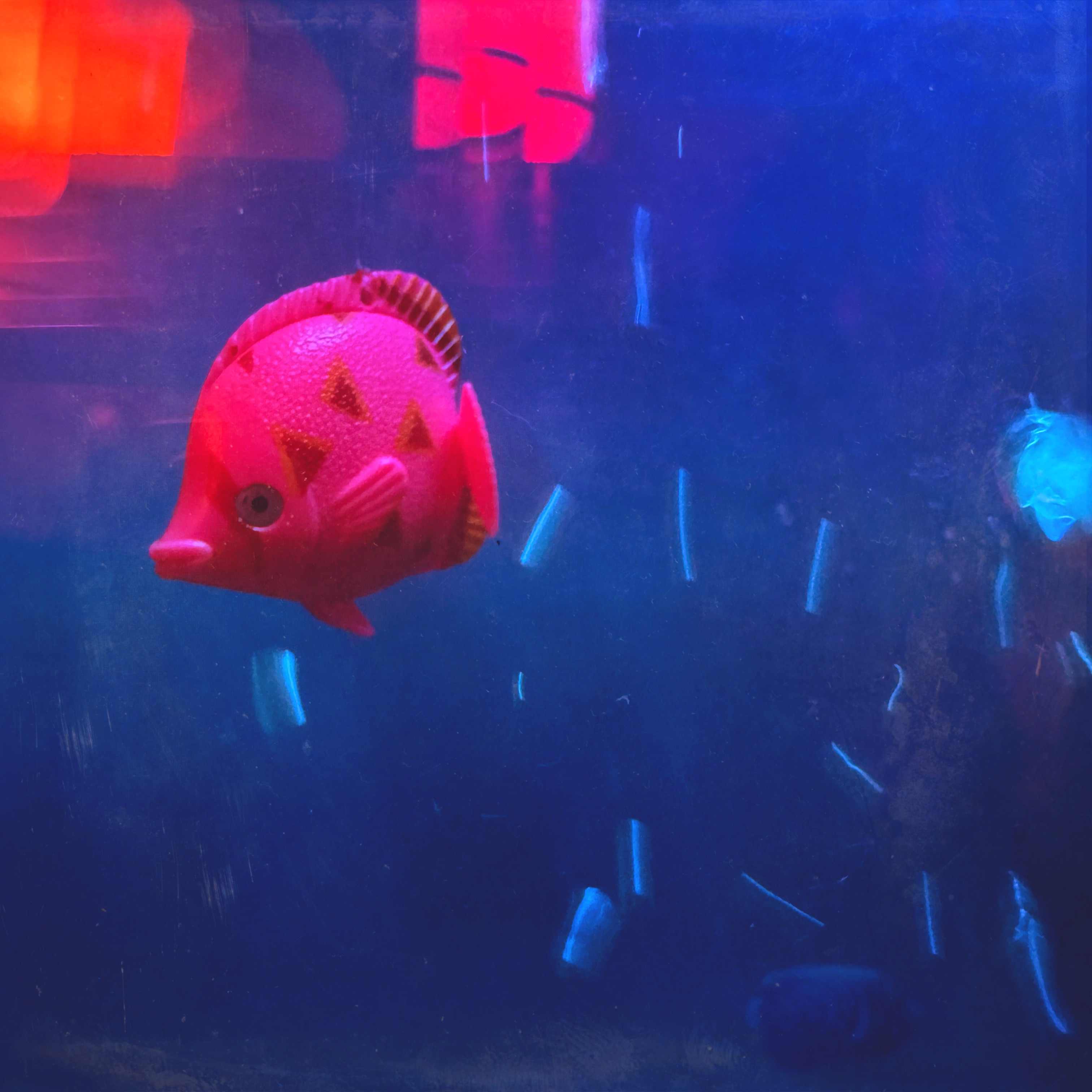
The aquarium sat by the register, a glass cube gone cloudy with years of grease and cigarette smoke. Algae filmed the corners, and the filter rattled like it might give out at any second. I always chose the booth across from it, the one with vinyl patched in duct tape, so I could watch the fish drift in slow, half-hearted circles.
One of them had stopped swimming weeks ago. Belly pale, fins trailing. It still floated among the others, caught in the current of the filter, drifting nose-first until a living fish nudged it away. No one scooped it out. No one seemed to care.
Mom worked the graveyard shift, refilling coffee mugs for truckers and insomniacs, her sneakers squeaking across the tile. The diner lights buzzed overhead, humming like they’d been awake too long. Her apron was smudged with ketchup stains and coffee rings, her ponytail sagging with strands plastered to her neck. Silverware clinked in the bus tub, the soda fountain burped behind the counter, and a man in the corner slept upright in his booth, coffee cooling at his elbow.
I pretended to read my math homework, but the numbers blurred. I drew boxes on the margins of my notebook instead, shading them darker until the paper tore. Sometimes I folded the plastic straws into accordion knots and lined them along the edge of the table, tiny trophies of passing time.
My stomach growled at the hiss of onions hitting the grill, the air thick with bacon grease that clung to her uniform and rode home with us.
Every so often she’d stop by my booth, lean down, and brush crumbs from the table. “Want some pie?” she’d whisper. I’d shake my head even though my mouth watered, because I knew pie meant tips she couldn’t pocket.
The aquarium gurgled behind her. One fish—orange, scales peeling like sequins losing their glue—brushed against the lifeless one, then darted away as if embarrassed. The dead fish drifted back into place, unbothered, as if the water always made room for it. I wondered if the living ever noticed the difference.
At two in the morning, when the last customer left, chairs scraped against the tile as they were flipped onto tables. The soda machine hissed once and went still. Mom slid into the booth across from me, her shoulders rounded. She pulled off her visor and smoothed her hair with both hands. Her palms were cracked, the skin rubbed raw from bleach and hot water.
“You tired?” she asked.
“A little.”
She studied me for a moment. “You’ve been staring at that tank all night.”
I nodded. “One of them’s dead.”
She glanced at the murk of water, then back at me. “Maybe. Hard to tell sometimes.” Her eyes lingered on the tank longer than her words did, like she didn’t want to be the one to say for sure.
I wanted to ask why no one took it out. Why the manager didn’t notice, why the other fish kept circling it like nothing was wrong. Instead, I asked, “How long do you think it’ll float there?”
Mom exhaled through her nose. “Longer than you’d think.”
The fluorescent lights buzzed again, louder now, like a wasp trapped in the ceiling. My chest tightened. In the tank, the dead one nudged the glass, then spun slowly in the filter’s pull, like it didn’t know it was dead.
“Why do the fish keep pretending everything’s okay? Aren’t they scared of the dead fish?” I asked. The words surprised me, like they’d been waiting in my throat for years.
Mom froze, eyes fixed on me, her mouth parting but not speaking. She looked older in that moment, like the light had settled on every line in her face. I wished I could crumple the question like a straw wrapper and flick it under the table.
For a long moment, the only sound was the filter’s weak bubbling. Then she reached across the table and pressed her hand over mine. Her skin was damp, warm, and trembling just a little.
“Because someone’s watching,” she said. “And they don’t want to let them down.”
Her voice caught on the last word. I kept my eyes on the aquarium instead, waiting for the fish to move again. The filter bubbled louder, a hiss and shiver that filled the silence between us.
When we finally left, she flicked off the neon sign, the one that buzzed OPEN in red and blue. The aquarium stayed lit in the darkened diner, a pale glow against the glass, fish still circling. I looked back once through the window, and the dead one was still drifting there, soft as a secret too heavy to keep floating.
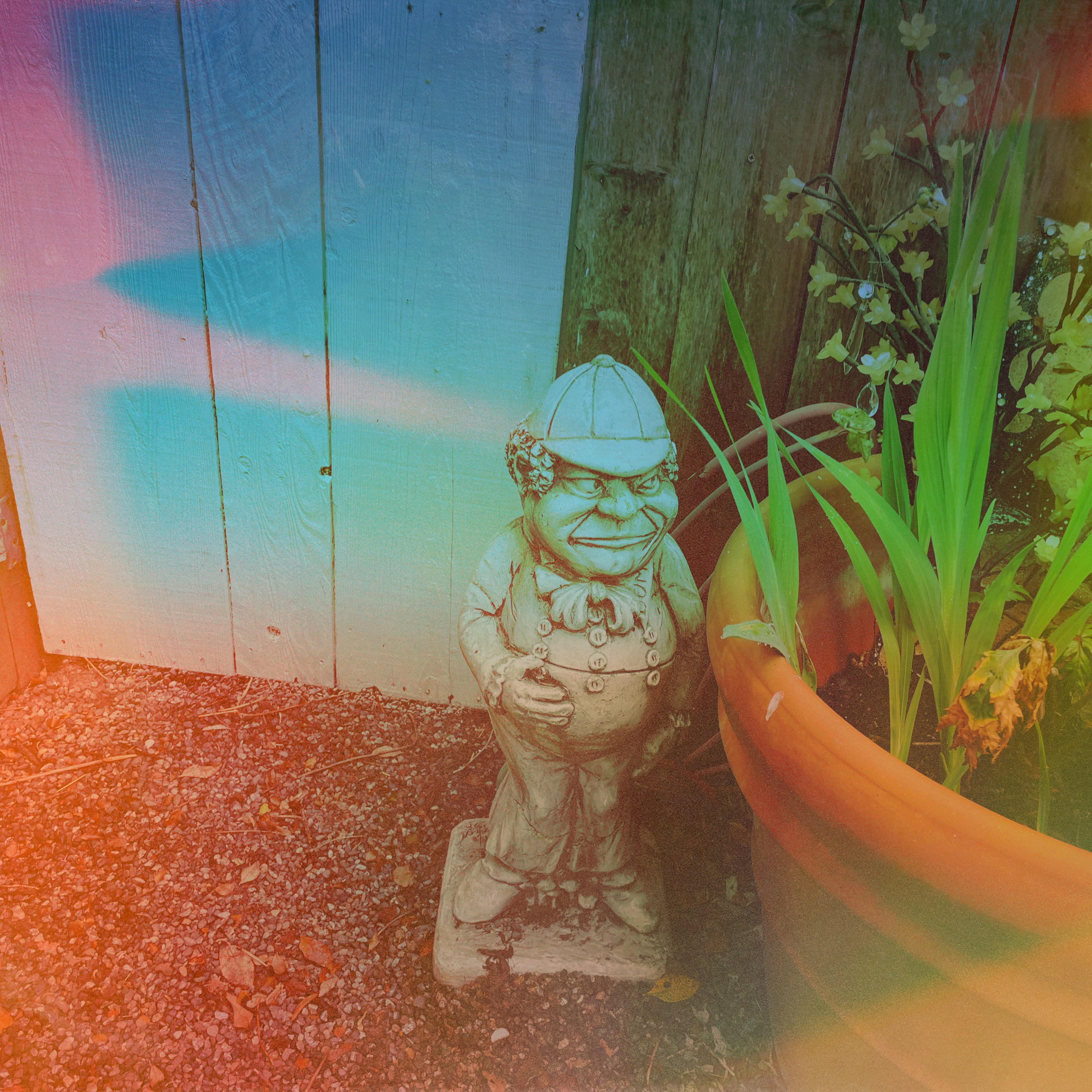
Year of the Goblin
By Benjamin Brindise
When my youngest cousin died my father lost his tongue. He stuck his index finger in his mouth and scraped the insides of his cheeks for hours convinced it should still be there.
We rummaged in the cold March garden for it just to be sure he hadn’t dropped it. You might expect waved hands and exaggerated gesturing, but when my fingers were in the dirt, he was lost from my vision, and it was entirely possible to forget he was there.
Silence is the blanket of grief.
When I stood up and brushed my hands off on my pants, I noticed small footprints. Three toes.
My cousin was a silent promise my family made to itself. That this time we would learn our lessons and impart them only and with nothing else.
Promises are made of half the things you do to keep them and half luck. A goblin can appear. It will distract you and scurry away with a little bit of each.
In the summer, my uncle blooms into a weeping willow in his backyard. His bulky arms thin into branches and cover everyone with their shade. The trunk is groaning from the stress of it, but everyone’s attention has been stolen. As if by small hands.
By fall, my uncle has reformed into a man, but he is missing pieces of himself. We spend the autumn sifting through piles of leaves for his old laugh and meaty hugs. We never find them.
When I pass my uncle the yams at Thanksgiving his hands touch mine and his knuckles whisper, “He has been digging his fingernails into his palms all night, just so you know.”
When it snows, I gather up everything warm and tuck it under a tree to see if the total of everything worth living for outweighs the rest.
In the night, I can hear small hands tear at the wrapping paper.
On New Years’ Eve, I catch movement out of the corner of my eye as the ball drops. My date misses my mouth and I spill a drink all over her dress. The moment’s gone.
In the year of the goblin things go missing. In the year of the goblin, things get taken from you.
Just like every year.
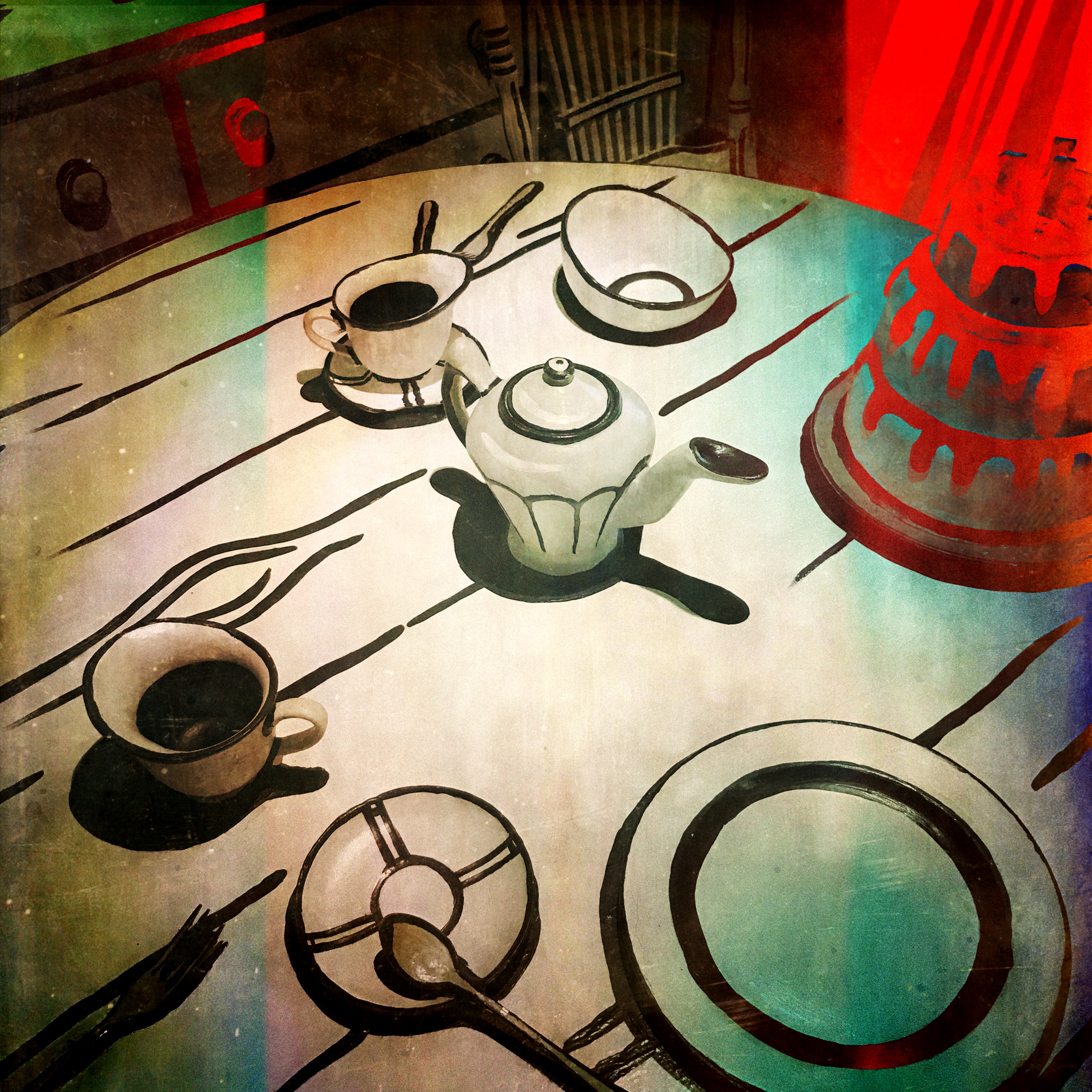
The Sound of Boiling Water
By Pravy Jha
The kettle always whistles too soon. My mother says it’s because I never wait long enough, but she doesn’t understand that waiting feels like drowning, that in the seconds before the whistle, the silence presses against my ribs like something trying to get out.
This morning, I’m making tea in her kitchen again. The tiles are the same chipped white, the same half-peeled sticker of a cartoon sun on the fridge. She’s gone to her appointment, and I’ve promised to stay and make the house look lived-in. It still smells like antiseptic and turmeric.
I line up her cups, the old porcelain ones she’s had since before I was born, and think about how she never threw away anything. Maybe because she couldn’t afford to, or maybe because she believed that things remembered their use. That a cup without a drink felt lonely.
When I was ten, she told me that every house has its own sound. Some people’s homes hum softly, like bees behind glass. Ours always clicked, the fan, the switchboard, the gas stove, the clock that ran too fast. I used to listen for those clicks, trying to catch them all at once, as if I could trap time.
The kettle screams.
I pour the water, add too much milk, the way she hates it. It’s strange how even rebellion tastes like memory.
When she first got sick, I thought I could fix things by cleaning. I scrubbed the sink until it shone, folded her dupattas by color, replaced the half-burnt bulbs. She watched from the sofa, her face tilted toward the light, saying nothing. I kept waiting for her to scold me, but she only said, “It’s good you’re learning how to wait.”
The tea goes cold before I remember to drink it.
I walk to the balcony, where her plants are dying with a kind of dignity. The hibiscus hasn’t bloomed since May. The basil leans against the railing like an old man. I water them anyway, because that’s what she would do, keep caring for what no longer responds.
Downstairs, someone is selling guavas from a cart. The same man who’s been coming since I was a child. He shouts, “Amrud le lo!” and for a second I imagine my mother’s voice calling back, “Do kilo dena!” She never haggled. She said fairness was a form of prayer.
Inside, her phone buzzes on the counter. A reminder: Take 10 a.m. meds. I tap “done.” My chest feels tight.
When she comes home later, she’ll probably ask why the kitchen smells of milk instead of ginger. She’ll complain that the sugar’s too little, that I never learned how to stir properly. I’ll laugh, pretend it doesn’t sting, and we’ll both pretend we don’t notice the tremor in her hand as she lifts the cup.
For years, I believed love was something loud—declarations, arguments, slammed doors. But sitting here now, I realize it might just be this: knowing exactly how much water to boil, and for whom.
Outside, the guava man’s voice fades. The kettle cools. The house clicks.
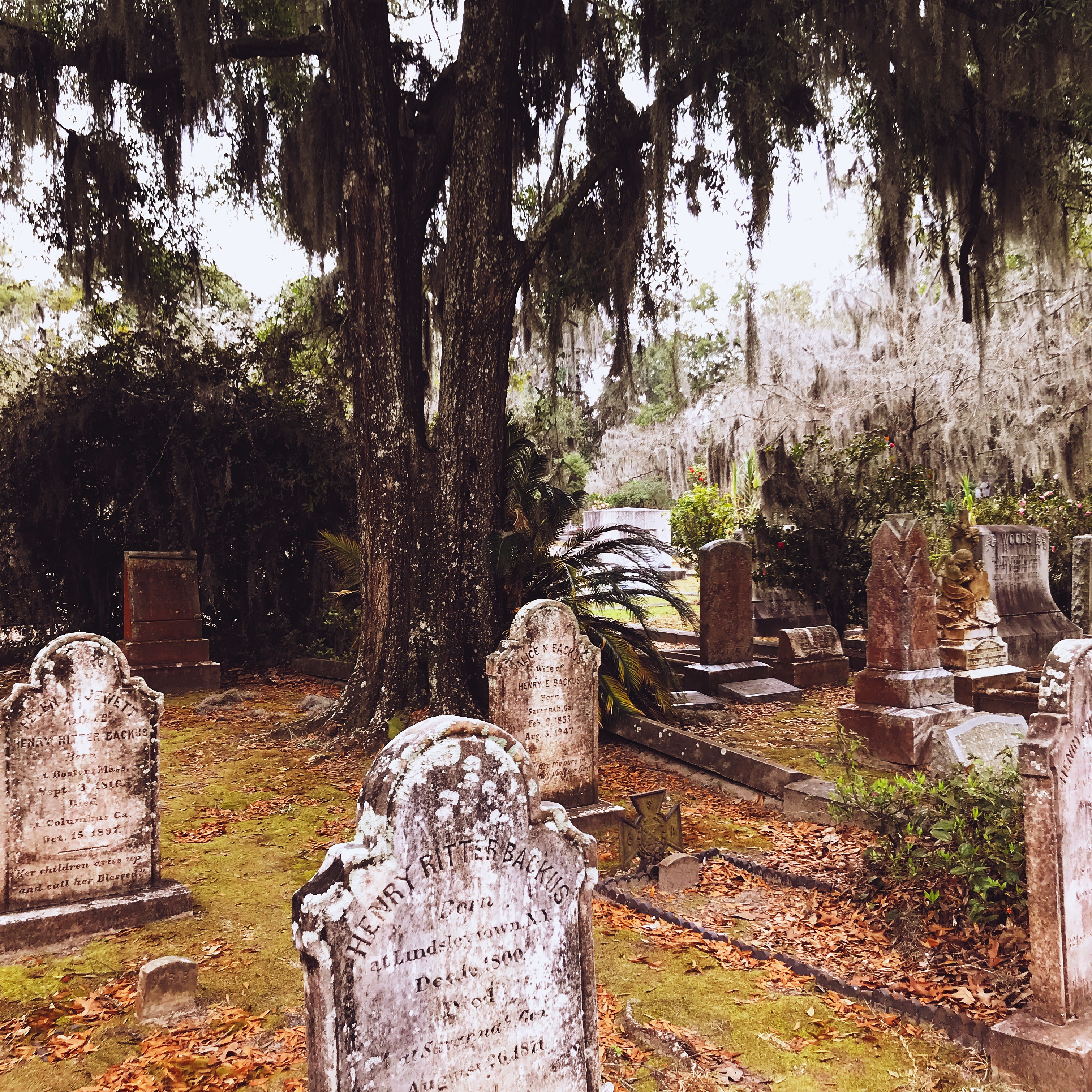
Just Not an Ordinary Evening in Ami-dong, Busan
By Mandira Pattnaik
Before I tell you more, let me put my eyeballs back into their sockets, the sockets back onto the face, the face back pasted on the head, the head back over the neck, the neck back on the body, the body where it hangs by the trench coat collar on the hook behind the door. So nobody sees it, let me put the door in the room beside the bathroom; place the bathroom and the room with the door with the body on the third floor, where the lights are perpetually on but no body from the street notices. Now let me put the third floor above floors where no one resides because word has it that this particular lane in Ami-dong, Busan, is heavily haunted—as though heavy and light are countable here. Before you begin to care, let’s disclose that there have been no murders on this lane, no beheadings and no one’s gone missing, so let’s just say it’s a manufactured lie, and no reason why I should not meet you here on purpose to pose the all-important question: Am I still special to you?, but tragedy is, you take no note, as though I am invisible, as though I am only a feeling like a sentiment easy to ignore, as though I am a text deleted unread, and continue your appointment with someone else at Piggy Bistro just opposite, eating beef steaks, black beans and lemongrass and you’re planning to join a karaoke night. Stop right there! Allow me to tell you that I used to piece together bodies of crash victims for a living. That was when I had a one-piece-fully-assembled body—did that on meagre wages too. I used to stitch them together, and wash those rag-tag dead in solution, so they were not as unpresentable as they were when I received them from the mortuary and rather made them quite ready for the funerals. By the way: Did you see my face at mine? The funeral was quite ordinary, and your absence was strongly felt. Because it’d just been three days to the last time, I was about to cross this very road, and walk to the eatery to call upon you when it happened. A rouge ten-wheeler. I heard you scream last thing. I’d like to believe it was my name. You had a thing going on for me—didn’t you? even though I knew I was too lowly for you; friends said I had no chance; but what can one do when one is in love? Before you have reasons to feel ultra emotional now, let me place this three-storeyed house in a valley of flowers, paint the walls mauve, plant a garden of bougainvillea, place an orchid in every vase, put a child in a corner surrounded by toys, and you’ll live on, after a fashion, in that peacefully livable, and undoubtedly lovely house, at least for my eyes. After that, who knows? One can’t cling on to all one desires, and let’s be frank, you weren’t all that much of a prize. But I guess I’m sentimental like a fool and I like remembering why I picked you, why I was emboldened enough to cross my tiny office adjoining the mortuary where I’d been stitching a mother of two barely in her thirties that day, and why I wanted to tell you about myself that very evening, while rain drummed through, as though a monster’s wretched crying. Anyway, food for the Admin belly to think about. Fyi, Admin are those good geeks who guide piecemeal beings like me from the other world to here. People who are beyond failing. Yes, this whole story is pretentions. Admonish me. Shoo me away. Don’t care. I’ll go back, put my trench coat collar on the hook behind the door, the door beside the bathroom, the bathroom on the third floor, where the lights are perpetually on and no body from the street notices. Pshaw.
 BRILLIANT FLASH FICTION