
Crows
By Hugh Behm-Steinberg
A crow, a big one, lands on the fence around the bins at the edge of the parking lot. I’m in our car, doomscrolling. It’s October, still broiling; I’m waiting in the only shady spot left, next to those bins, which stink, for my wife to finish her doctor’s appointment, which also stinks, because only patients are allowed right now in the medical center, stupid flu outbreak. The air conditioning only sort of works and the car engine overheats so I keep the windows down even though it’s awful. Everything’s awful. The crow looks at me; I’m trying to ignore it. The crow takes a hop onto the passenger side door, poking its head in.
“Hey!” I yell.
The crow, nonplussed, hops back on the fence, looks at me, looks away. Before I can roll the windows up, it hops right back over to my side.
Its black beak is as long as my middle finger.
“Do you have anything I want?” says the crow, looking at me sideways, taking me in.
“I have an ashtray full of change,” I offer back, more quickly than I should.
“Let’s see.”
Very carefully I pull out the ashtray and show it to the crow.
“Nah, those are dull and dirty. What else have you got?”
I check the glove compartment. “How about some sugar-free cough drops?”
“They look poisonous. Are you trying to poison me?”
“I’d never poison a crow,” I say.
The crow hops over me, onto the passenger seat, then into the back, exploring all the corners and crannies of the car.
“What kind of person are you?” asks the crow, between its rummagings. “What sort of life have you lived, that you have nothing a single crow might want?”
One quick jab, and it could take one of my ears, or blind me, just like that, do some permanent damage, and all I’d be able to do is wave my arms around and yell.
“You’re not going to attack me?” I softly ask.
“Do something better with your life! Get me something I’m going to want.”
“Okay,” I say, a little too quickly. “I’m going to get out of the car and go inside to see what they have available, but first you need to get out so I can roll the windows up.”
“Why?” asks the crow.
“Someone might steal my car if I walk off with the windows open.”
“Hold on,” the crow says, then it sticks its head back out the window and makes two caws and three clicks. A second crow circles down and settles on the passenger seat. Three more land on the bins.
“No one’s going to steal your car now.”
The crow preens its pal, right below the beak, then it hops over me, up to the car window, then back to the bins to converse with the new arrivals. The other crow sticks around. “Go ahead,” it says. “Just leave the window open. We’ll be here when you come back.”
It craps on the seat after saying that.
But there goes my idea about taking off, not that it would have worked anyway since I’d still have to come back for the car and pick up my wife, and the crows (plus maybe thirty of so of their angry friends) would be waiting.
Putting on the balled-up mask in my pocket, I walk inside the medical center and tell the receptionist my wife’s name, asking if she’ll be ready soon. I must seem really stressed because the receptionist gives me a look, like she understands. She points to a Halloween basket full of white chocolate Kit-Kat bars on the counter.
“For the crows,” she says. “One per crow.”
“Okay,” I mumble, reaching inside for the candy.
The receptionist takes off her glasses, like she’s had this conversation many times before, with people who’ll never take her advice.
“You know,” she says. “Crows are really good conversationalists once they get going.”
I don’t want to talk to her. I just want my wife to be okay, to drive home, to not have to deal.
“One of them just crapped in my car,” I say.
“They do that,” she says, pulling out a spray bottle of cleaner. “But if you just try talking to them, they’ll tell you all sorts of things.”
“Will they tell me wife’s going to be okay?”
“They’re crows,” she says. “There’s towels in the men’s room.”
Walking back to our car with the candy and the cleaning supplies, I can’t even begin to think about what me and the crows might talk about, such as sports, or the economy, or like, how do you live with fear, that at any moment you just know and there’s nothing you can do about it, like how often the thing you’re afraid of most will just come to you, like a bird, curious to see how you’d react, while you’re holding tightly onto whatever happens to be in your hands at that moment, like some candy and paper towels, with something ridiculous nearby, like your car suddenly full of crows.
I’m sure we’d have a lot to say.
The Boy Who Danced in Borrowed Shoes
By Zary Fekete
There was a boy who danced before he knew what it meant to be different.
He was young, living in the shadows of tiled courtyards and pollution-dense skies in a country that spoke in tones his mouth never quite mastered. Still, his body heard another language. The kind spoken by movement, by rhythm stitched into breath. It came from screens, from music leaking through headphones, from figures moving like they had been born mid-step. He watched them as one watches rain fall on foreign soil … alert, blossoming, and curious.
Later, in a colder place, the snow told different stories.
St. Paul, Minnesota, did not move like the city he remembered. But down an ordinary street, in a modest building behind a Vietnamese restaurant and a videogame store, there was a Hmong dance studio. He found it almost by accident, or maybe it found him. He stepped through the door not knowing what to say. They looked at him … this white boy with too-long limbs and too-serious eyes … and they let him stay.
They gave him shoes. Not new ones. Used, softened by the weight of others’ moves. He slipped them on as one slips into a new prayer. Not certain, but willing.
He began to learn, not just steps, but how to enter a space without needing to own it. How to be small without vanishing. How to move like an echo of the teacher’s certainty.
Over time, he did not become less of who he was, but more. More attentive. More shaped by others. More fluent in the choreography of belonging.
Last summer, they chose him. Two teams, one for K-pop, one for HipHop. He smiled that night when he told us. The smile is what showed what it meant to him. But he didn’t gloat. He just kept dancing. His muscles ached. His shoes wore thin. He taped his toes and stretched in the quiet corners of our apartment. He practiced until the mirror became more memory than reflection.
In March, they won. Twice. He came home with medals tucked into his bag like small, bright secrets. He didn’t mention them right away. But I saw how he stood in the kitchen that night … still, but glowing from the inside out. Not pride, exactly. More like peace.
Now he speaks of Tokyo.
He’s learning station names, memorizing footwork from Japanese crews who film beneath sakura blossoms, learning kanji in between dance routines. He trains in the hallway, the living room, any place where light and floor meet. He dreams with his whole body.
And I, watching from the doorway, think of what it means to be received. To be welcomed where you do not match the frame. To be told, not with words, but with time and trust: there is space for you here.
He does not dance for fame. He does not seek applause. What he chases is not attention, but connection. He wants to be part of something older than himself, something rising through the soles of his feet. Not ambition … just movement, faithfully offered.
Some nights, he lies on the floor after hours of practice, arms spread, eyes closed. I ask if he’s tired. He says, “A little.” Then, softer, “That felt good today.”
And I remember: the world does not always open to those who knock loudest. Sometimes it opens to those who learn the rhythm of waiting. To those who arrive with quiet strength and a willingness to listen.
My son does not yet speak of faith in words. But there is something in his motion that feels like prayer. Not the kind you recite, but the kind you live. A choreography of grace. A rhythm of return.
He dances, and the world shifts slightly. Opens a little more. As if heaven itself is stretching forward, watching, smiling.
He doesn’t know it yet—but he is not dancing alone.
Letter to Montana
By Teresa Milbrodt
I miss your visits to the coffee shop, how you carefully wiped your hooves at the door whether or not it was raining and stood at the end of the counter since you didn’t need a stool. You waited patiently if I had a line at the register until I could take your order, and I appreciated that grace. After I served your cappuccino we mulled over job ads and shared laments about the market and whether you should get rid of your lovely iridescent horn. Nothing but a hazard, you said, though your parents would have disowned you for the thought, figuring you planned to pass as a mere Palamino.
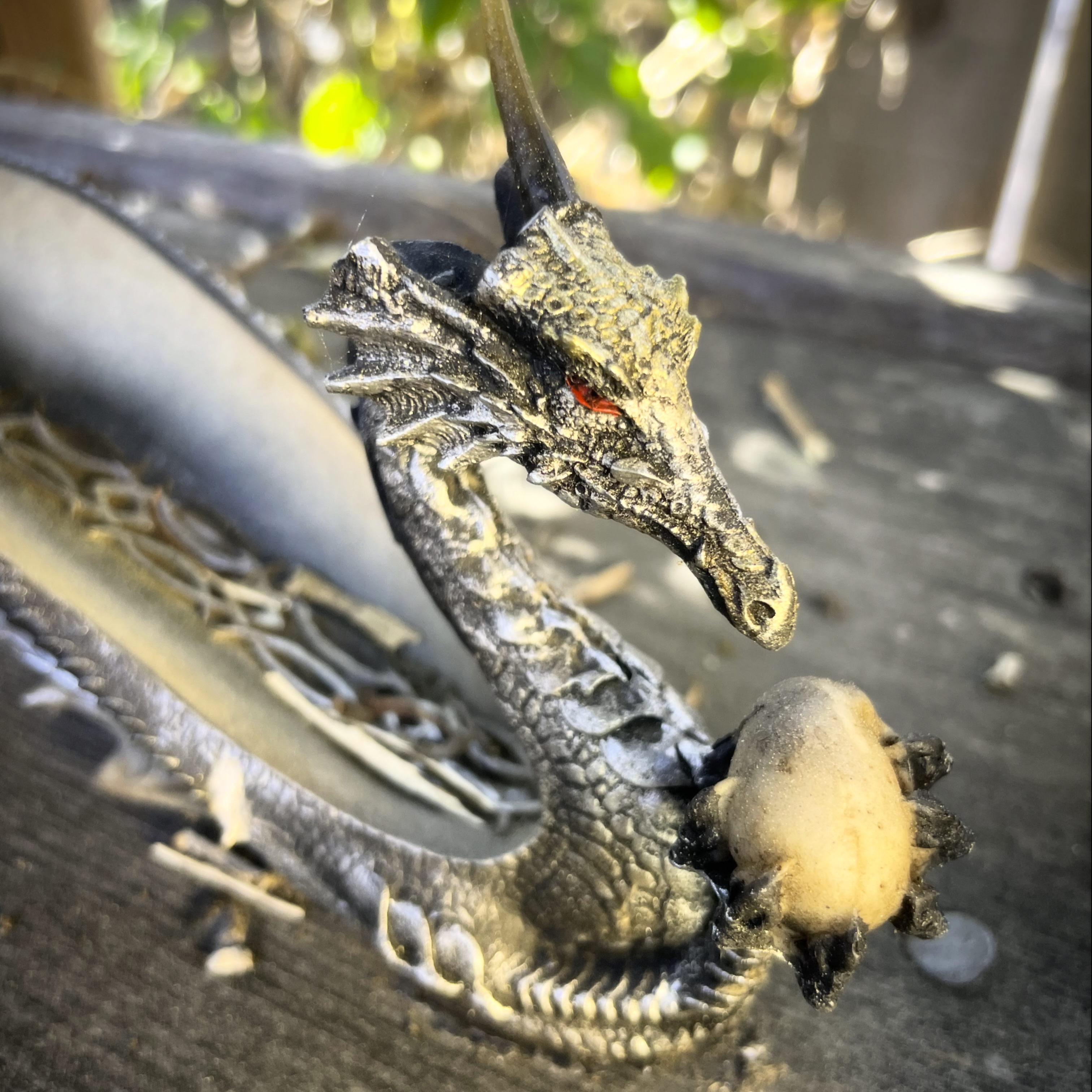
You said you liked our coffee shop since we had ample room, but I want to think you enjoyed the company of a kindred spirit. I hope you’ve found another good coffee shop in Montana and someone else to chat with, since we need confidants who understand impression management. How much are our lives controlled by constant fears of how others perceive us? Often I chat with other dragons who sigh over how folks assume we’ll be stingy, breathe fire, or grant wishes, but most of us have simple jobs at banks, restaurants, or grocery store bakeries, and deal with snide remarks about stealing from the register or setting the place on fire simply because we have iridescent green scales.
We don’t want anyone to ask What can you do? an invasive and insulting question. Isn’t it enough to make a decent cup of coffee or work in technical support answering phones, which requires patience. Even if we were able to breathe fire, the headset would catch flame which seems counterproductive. So many of us have college degrees but get the side eye at job interviews, and leave knowing we’ll fill out more job applications. We remind each other that it’s not our fault, even if we bear the weight of guilt.
I don’t understand why more folks aren’t impressed that unicorns can communicate telepathically, but since you can’t read minds, employers shrug and say you’re only good for pony rides and farm work. You can argue about the number of unicorns with office jobs who use mouth sticks to type, ones who work in advertising and are great with graphic design, and others who have a gift for numbers, but potential bosses don’t want to deal with your bulk behind a desk.
It’s not fair that we must justify taking up space in the world, or that you’re considering horn removal since folks say it’s dangerous to swing your head around even if you usually have a tennis ball on the pointed tip. I never blamed you for being teary, asking why you couldn’t do anything right. It was a blow to your self-confidence when your parents and siblings expected you to make it in the world regardless.
“I want to move to Montana, but my folks want to keep me close,” you told me more than once. “Mom says I’m brilliant and I need to fill out one or two more applications, or I could get a temporary job with Uncle Richard at the hardware store doing inventory. I didn’t get an accounting degree to count nails. Dad says I need to be patient, but I’ve had the patience of a boulder and it didn’t get me anywhere.”
You told me about dreaded Sunday dinners, how it was difficult to change the subject from your life to how your youngest sister was doing in school since she loved history and wanted to be an archaeologist, was blessed with a potential career that would keep her outside or in massive museums. Who hasn’t narrowed their eyes at a gifted sibling and thought about moving far away, but you worried Montana would be too damn cold, and what if there weren’t any more jobs and your hooves froze in the meantime?
I’m relieved you took the chance even if I miss you terribly. I haven’t applied to other jobs yet—the free coffee is too comfortable and you know how exhausted I get with the thought of more applications—but I think of you often and wait for a call, a picture, a note to say you’re doing well under those wide skies. Until then I keep my claws crossed and a stool open for you or anyone else who needs a chat, those sympatico spirits who share dreams that are constantly shedding glitter. We don’t need magic, just enough hope and coffee for today, tomorrow, and another tomorrow.
Molly Has to Pose a Dead Bug in My Mouth
By Maria Zafar
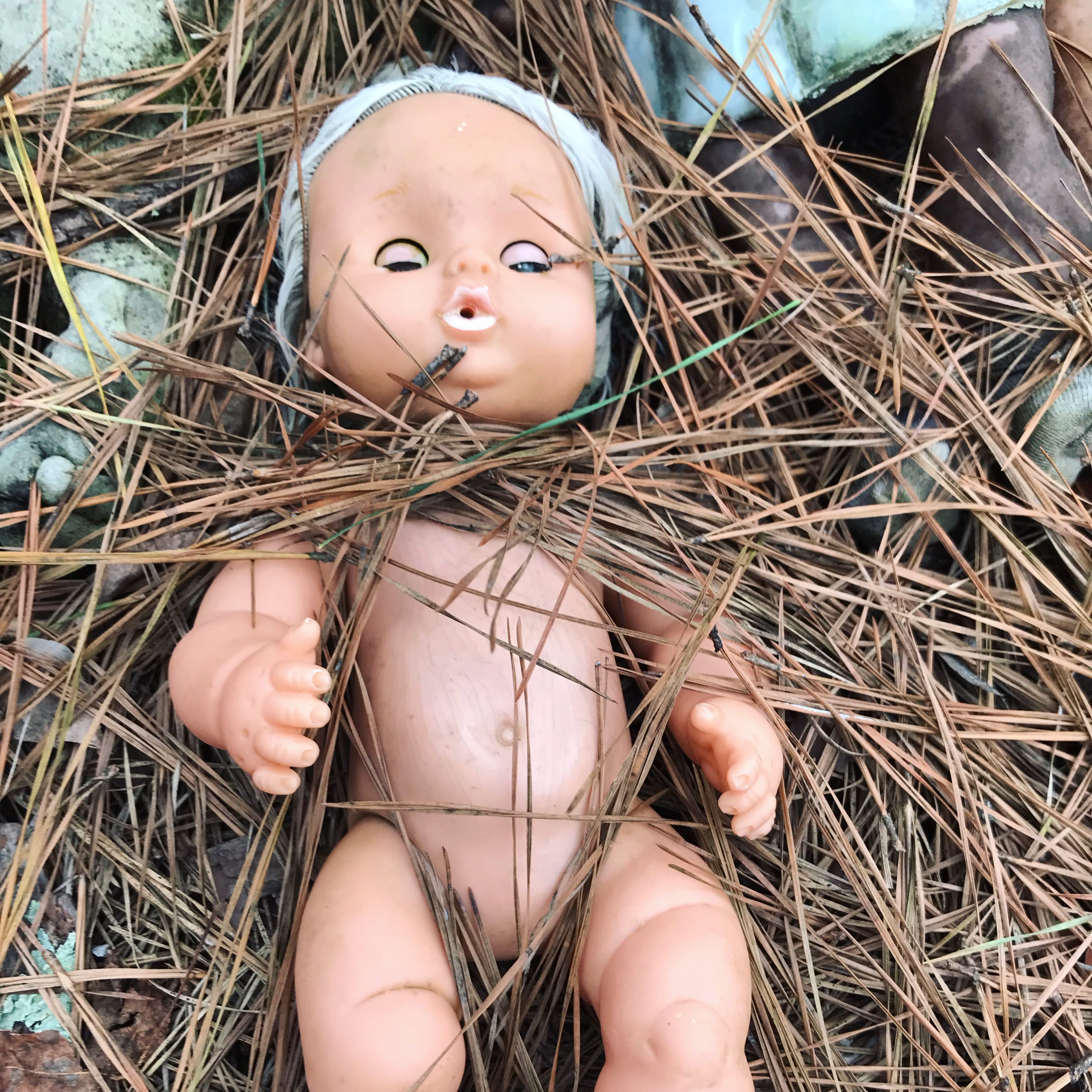
Molly likes dead bugs and damaged dolls. She tells me my eyes are like holes she once punched in the drywall. She dyes her hair the strangest shade of blue, even though she is too young for it, too young for punching holes in the drywall, or dyeing her hair blue.
I am not scared of her, but I’d like my hair a strange shade of hers. She tells me to close my eyes and open my mouth. She places a dead bug on my tongue. When I spit it out, she says, with a straight face, “I had yet to pose it.”
When we turn 12, she asks me to run away with her and says, “Any country will take in two girls and a doll.’’ I tell her I’d go but need my mother to tuck me in at night.
When we turn 15, Molly comes to my house on her new BMX bike and tells me we are running away for good this time. She suggests we could only pack her dirty doll and her mom’s crockery, which she keeps in a shed. Never used, never chipped, just kept away in a shed. She says, “We are more likely to look like adults if we carry our own crockery.”
The shed has neatly arranged rows of plates on higher shelves. Molly instructs me to leave a gap shaped like us. I twist my foot as I climb down; the plates in my shirt clank and click as I fall.
Molly laughs at me and says, “You must run if you are to run.”
She stacks her schoolbag with the stolen crockery and leaves me one plate. On the day we are supposed to go, she says, “We’d better not leave; the plates are cursed and my doll is missing a foot.” I happily return the plate to the shelf. It clanks and clicks, and fits into the gap that is no longer shaped like us.
Molly stops coming to play. She now carries a bigger expensive bag and stuffs it with broken plates. She gives me her dirty doll to keep, but I don’t like it. It is missing a foot and stinks. She goes to see the mountains with an older man. The man gave her the bag and bruises in unlikely places. When she comes back, she says, “The bruises will fade, but the bag stays.”
She outgrew the bag sooner than she expected. But she never outgrew the mountains. She told me she’d become one too, someday—weightless and covered with snow, no longer driven by her mother’s desire.
We are 17 when I push Molly away. My mom says I have big things to do. I go on to do bigger things in life.
I turn 22 and catch Molly breaking into my mom’s kitchen. She has chipped all my mother’s plates and says, “Mothers are better off without their crockery.” I don’t want my mother to hurt, so I lock her away in there. She sings and keeps on chipping away at the dishes—gnawing at microwave-safe bowls, munching on spoons of sterling silver.
I am doing even bigger things in life at 29 when Molly drags me to her wedding day. Her one-footed, stinky doll bobs and bumps into things as I bring it along. She twirls, and the embroidery on her dress is shaped like plates, chipped, gnawed at, half-eaten flower-shaped plates. I hear her husband call her by my name as she asks me to close my eyes and open my mouth. She places a dead bug on my tongue and says, “I have yet to pose a dead bug in your mouth.’’

The Alpha Male
By Laura Boatner
Truth has become subjective in my Uncle Tucker’s house on the hill where daffodils are now dandelions and where bald eagles have flown to die.
It’s sizzling outside and his tired old Labrador pants with his black-spotted tongue. I notice it’s slowly drip-dropping in a steamy puddle on the slick, cool concrete. He’s lying under the boat in the carport where he’s confined with a thick frayed rope. Poor guy, I think, although he has a part smile on his face if dogs do such a thing.
After my uncle leads me through the stretched-out screen door, he reaches up with his right hand and grabs his nut-brown bourbon bottle on the bottom shelf that’s missing its cabinet door, and he grabs a mason jar from the counter with his left.
I see him nod, so I open the fridge and grab a cold Guinness from the inside door. I try not to projectile vomit when I see his shriveled tomatoes and moldy cheddar cheese next to a big slab of venison. As a naive wide-eyed kid, I didn’t like the idea of sidelining one of Santa’s team.
We sit for a while in the stuffy wood-paneled den and talk about how hot it is. He’s lived here since 1972. A floor fan offers a brief reprieve, but it’s one of those fans that rotates back and forth, and it squeaks every time it passes me. I’ll take whatever I can get, though, and I actually find the sound pleasantly hypnotic. I try to divert my gaze from his taxidermy experiments on the wall.
Something’s different now with his right eye a little bloodshot and his face more drawn. He lost his left eye when he was in the military, earning him an honorable discharge. He always laughed as I screamed when he showed me the empty socket.
I comment how the summers are getting hotter and hotter over time, and his number-11 brow lines now seem to clap in the middle and tiny bubbles begin to form on the corners of his stick-straight mouth. No hotter than usual, he says, and I know exactly what he’s thinking. He always mutters something about me getting crazy woke ideas since I went off to college up north, even though I knew how these things worked way before then.
Better not get him started on who shot JFK or 9/11 being an inside job or nefarious Chinese labs. I know that’s a danger zone and my fighter jet doesn’t want to land on that particular runway where he worked in the Navy.
I hear in the background that his TV channel is turned to the only channel my sister says he watches 24 hours a day. The commentator is supposedly an alpha male, but he wears far too much product in his hair and caked-on make-up on his pock-marked face. The man jokes about beta-male husbands going grocery shopping with their wives and then going home to do laundry. He’s always talking like that, that manly-man on TV, even though his face always looks like it’s been slapped by a pancake and he never blends at the curve of the jaw, making his white ears look like they belong on a corpse. I’m sure if my wife heard his nonsense, she’d want to kick him in the nuts.
After almost an hour of small talk, including the fact that the Astros beat the Rangers in a no-hitter last night, he glosses over the fact that he has cancer. It’s pancreatic. Without skipping a beat, he goes on to blame the loss last night on the Rangers signing the chinky kid from South Korea.
He keeps glancing at the TV for a split second while I’m there, obviously to see what he’s missing. It brings me back to him having one of the first remote controls that came out with his Zenith Space Commander TV in the eighties. It worked by emitting sound, even though none of us understood what that really meant. I just knew my cousins and I could jingle his keys and the TV would come on, making us laugh hysterically. His second wife, God rest her soul, would always have to unplug the vacuum cleaner to keep it from changing the channels back and forth.
I suddenly have an overwhelming wave of sadness that my uncle has such little time left and is being held hostage by this hyperbolic horseshit.
As I leave, I tell him goodbye with a tightening of my throat. I hug his gaunt body and spontaneously kiss his stubbly cheek, knowing this might be the last time I make it back home to see the old man. He’d been like a father to me since his much younger brother drank himself to death. He wasn’t perfect, but he’d done his best. My gesture makes him jerk way back and shake my hand instead.
Because that’s the way a real man does it.
Cycle in the middle of the road, with confidence
By Mairi Sutherland
You said you had overslept. Wished that you had a day off. We argued over something petty. Cleaning the carpets. Or decluttering the attic. Phoning the man to fix the leak in the roof. Skirting around the big issues. Again.
You said it was quicker by bike. Muddy Fox. I pictured an urban fox slinking behind bins. That you could weave in and out the lanes. I said whatever. My mind on day-off plans. A café breakfast of poached eggs on rye toast, a swim at the lido, buying a new book of short stories by Lydia Davis.
You said your boss micromanages. That he has zero emotional intelligence. I see his name flash up on my phone screen. Chew on my toothbrush. Let the call ring out. I wonder if my skin will goose-bump and turn blue. If the water will shock my mind into being still. You said we needed hobbies. To find an outlet. That it would happen when we weren’t obsessing over ovulation charts and temperatures and peak fertility.
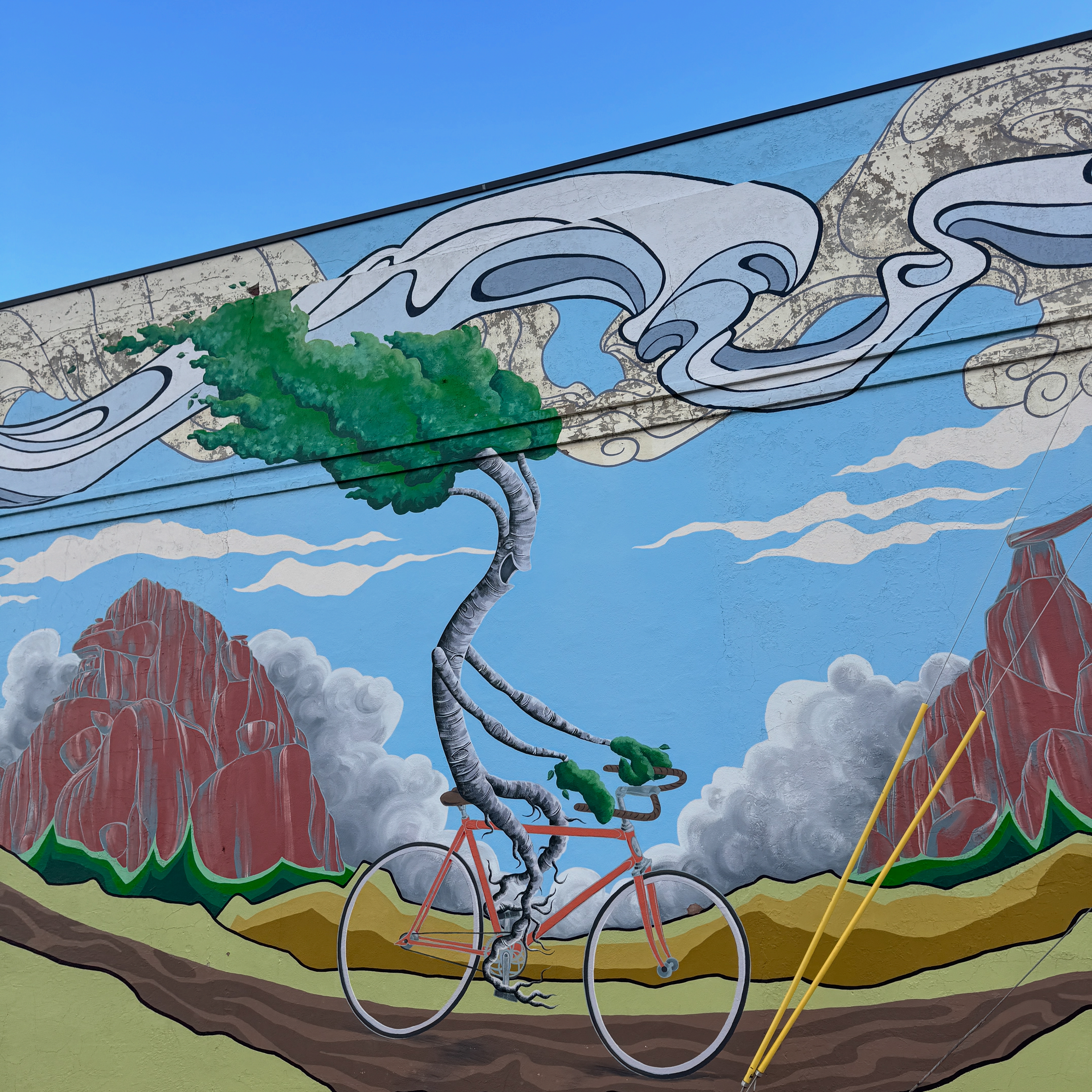
You said biking was in your blood. That to be safe you had to be confident. Cycle in the middle of the road. To show you are seen. I picture the helmet on the banister. Plunge myself beneath the water.
You said I worry too much, overthink, and pick away until it happens. You dead-headed the roses, renewed our house insurance and took photos of single trees.
You said hearts are programmed to the number of heartbeats in a lifetime. You looked like you were asleep. Your jaw half-open, as if Death said Boo got you! You smelt of peppery cologne and diesel. I bent my head into your chest, whispered your name, said you were a fuckwit and I was at optimum fertility, goddamn-it.
BUMPER STICKER
By Chuck Augello
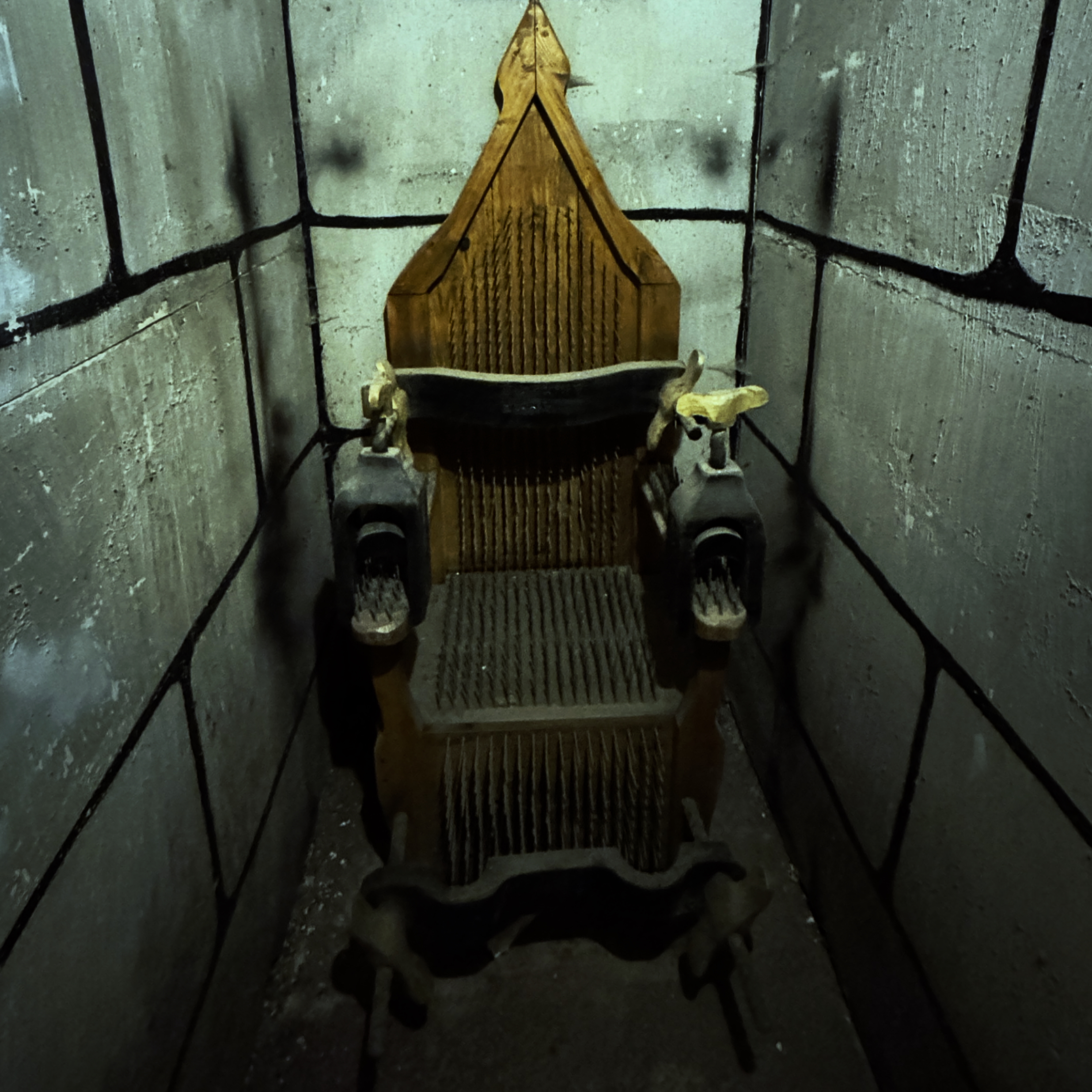
It’s a free country, he thinks, but nothing is free at the grocery store or the gas station, and of course the mortgage isn’t free, there’s principle, property taxes, and interest to the bank at 6.5%, can’t put a roof over your head if you don’t feed the profit machine, but no matter how precarious his bank account, there’s still freedom of speech, Congress shall make no law, etc., the First Amendment his birthright, freedom of speech, of the press, go ahead buddy, peaceably assemble and petition all you want.
So why is he nervous about slapping a sticker on the bumper of his car?
“Don’t do it,” his wife says. She hates bumper stickers, considers them trashy, an eyesore on the smooth plane of the bumper, but this time it’s not about aesthetics. “People are so angry these days. Why make yourself a target?”
He’s not a brave man. He imagines confrontations in the parking lot, people screaming at him, tires slashed at the trailhead to his favorite hiking spot, honking horns and raised middle fingers following him on the highway, pickup trucks chasing him off the road, and you never know who might be carrying a gun. Why take the chance?
But the sticker holds a message he believes to his core, and how can he not speak out? It’s his inalienable right as a citizen, and he opposes the actions of his government. His outrage, his shame, and disgust grow each day, his tax dollars malevolent, and while he lacks any real power or influence, he can still proclaim his opposition. A bumper sticker isn’t much, but it’s something, a message to the world that this is wrong.
“What about us?” his wife says. “Putting that sticker on your bumper changes nothing. You really think someone is going to see you drive by and suddenly change their mind?”
I know, I know, he admits, but silence is complicity. How can he not speak out? It’s a free country, isn’t it?
“We need to raise our collective voices,” he says. “Who cares if some jerk gives me the finger?”
“What about work? You park in the same lot every day.”
“I get in early. Nobody knows what car I drive.”
“You don’t get in that early. People see you, and security has your license plate number.”
“They’re not going to run my plates.”
“How do you know?”
Well … he doesn’t. And Congress shall make no law means nothing in the workplace. Employment at-will. They can fire him anytime, for any reason, political beliefs unprotected. Wasn’t there a woman fired for a social media post? Or those student protesters placed on a blacklist?
Yet silence is complicity. The bumper sticker isn’t obscene or offensive. A simple statement of his beliefs. His employer is a fair, civic-minded corporation that complies with the rules.
But what are the rules? Every week the norms seem to change. If someone with power saw the sticker and supported the other side, well … he has bills to pay. Every month the mortgage greets him with its hungry smile.
He looks at the sticker, the bumper of his Honda, the world on the brink. Silence is complicity.
“I respect your beliefs,” his wife says, “but why put us at risk for a gesture that won’t make a difference?”
History remembers those who speak out, he thinks, but the history books never mention bumper stickers on 7-year-old Hondas. In college they read Thoreau’s Civil Disobedience but all anyone cared about was whether it would be on the test. Every day he burns with anger about the state of the world, those bastards, those bastards, the smirks on their faces during their daily briefings, their assumptions that some lives are worth less than others. There’s nothing he can do about it except slap a sticker on his car, but at least it’s something.
One morning he does it; he peels off the back and smooths the sticker over his bumper, his opposition made public for anyone to see.
His wife frowns and walks back into the house. It’s the smallest of gestures, he knows, yet he’s proud of his actions. If nothing else, he thinks, his opposition is known.
During the next day’s commute, he listens to an interview with a journalist bearing witness, the skull of the world with its wicked grin, but as he approaches the office, thoughts creep out from the frightened crevices of his mind. Employment at-will. Mortgage payment. Three hundred dollars every time he steps into a grocery store.
It’s just a bumper sticker, he thinks. It’s what I believe. It’s a free country, isn’t it?
Yes, but …
He pulls onto the shoulder, shifts into Park, and gets out of the car.
As he stands at the side of the road reading the sticker’s message, an SUV passes in the right lane, its horn blaring, the driver waving behind shaded glass. In support or opposition, he’ll never know. But he scrapes the sticker from the rear bumper and climbs back into the car.
Silence is complicity, he thinks, but keeps that thought to himself.
The Shortsightedness of Vampires
By Lisa McCormick
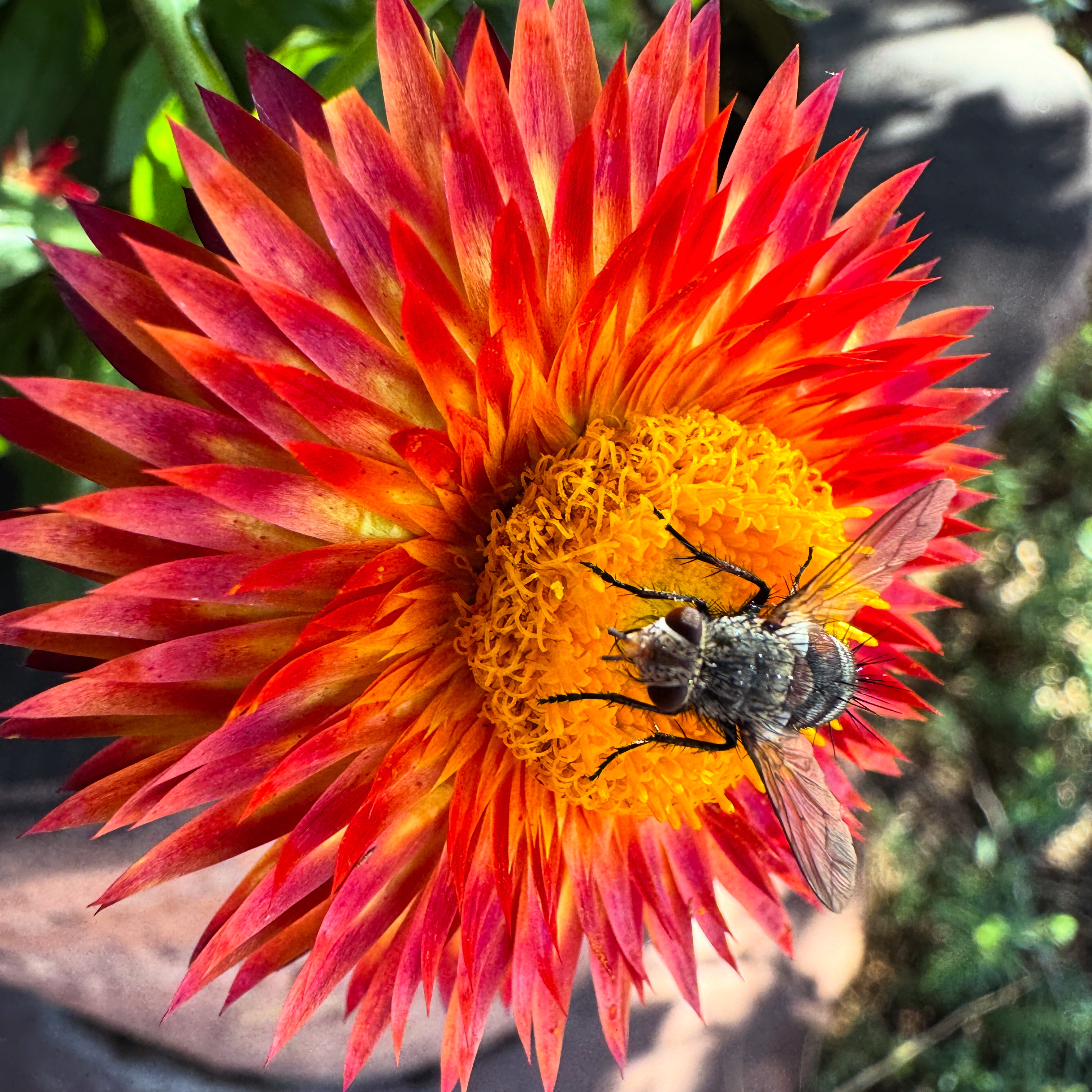
I don’t like sitting so close to the man next to me. We don’t know each other. I turn to him and say hello but he ignores me, staring over my head at the players on the screen. The men at the end of the bar are criticizing the calls and allegiance of the umpires, a word their thick southern accents change to vampires. The vampires are in it for themselves. It’s impossible to find an honest vampire. The last pitch was clearly outside the strike zone but apparently the vampire couldn’t see that.
I pay my check and take my beer outside. It’s dripping hot. I remember it’s my aunt’s birthday and give her a call. The answering machine picks up like always, “Hey baby, this is The King. Hey, I’m a little busy right now but why don’t we get together later for a cheeseburger, maybe pick out a Cadillac. Thank ya, thank ya very much.” I start singing Happy Birthday into the phone when I hear my aunt’s voice, a coy hello as though she didn’t see the caller ID. She’s been watching Jenny and is having a great birthday. Her son Rob bought her flowers and picked up Chipotle for lunch. He turned her on to the YouTube channel a few years ago. She keeps me apprised of Jenny’s travels especially when she visits San Francisco or LA. You’ll never guess where Jenny was, she’ll start.
“I wish he wouldn’t buy me flowers,” she says. I imagine her frowning at an overstuffed vase of roses, Asiatic lilies, and Viking Mums. “They’re just going to die.”
“Yeah, us too,” I say.
She tells me that Michael used to buy her flowers all the time, and she still can’t believe he’s gone. He should have taken better care of himself. He knew he had a heart condition. He should have gone to the doctor more regularly and been taking his pills. And maybe should have not gone so hard with a woman half his age behind your back, I think.
“Yeah, my mom was the same way,” I say. But I know that going to the doctor regularly would have done much for her. She seemed healthy, happy. She had a little trouble managing her blood sugar, but that didn’t stop her from walking five miles a day. It was the loneliness that she just couldn’t shake. “They both died too young,” I say.
“I don’t want to die,” I hear my aunt’s voice, an urgent plea.
“Your mom lived to a hundred,” I say.
“Ninety-nine,” she corrects.
“That’s 18 years away,” I say, “you’ve got lots of time.” We go back and forth about the short and long of it, of life. She ends saying she’ll spend the next 18 years doing the same thing she’s doing now, God grant it. I tell her I don’t want her to die. I tell her that I’ll miss her.
A man has been watching me talk on the phone. Smiling as I smiled and laughed, shifting to concern when my face turned earnest and solemn. He’s inside the restaurant, a sidewalk and thick pane of glass between us. He put on sunglasses so I couldn’t tell where he was looking but then took them off again thinking I wasn’t paying attention. Then put them back on, trying to get me to notice, I guess. I hung up the phone and walked to my car.
“Damn vampires,” I thought.
The Cats of Old San Juan
By Amy Lyons
I wanted to go to the cat colony on our honeymoon, but David had come to San Juan for pina coladas, chaise lounges, long swims, and fried sea creatures. He wanted hashtag resort life.
Monotony slunk into our marriage. Out to dinner with the same two couples once a month. Same television shows after work. Same fights. We could not stop holding each other to the people we’d been four years earlier.
I gladly gave up custody of our city, Chicago, the lake throwing daggers of cold from its surface, art upon art upon art. The storage space had room for the few things I wanted to take with me into whatever new life lay beyond my second trip to San Juan. The rolling grate slid down between me and my old life, startling a rat from behind a dumpster. I watched him scurry down the alley, filthy.
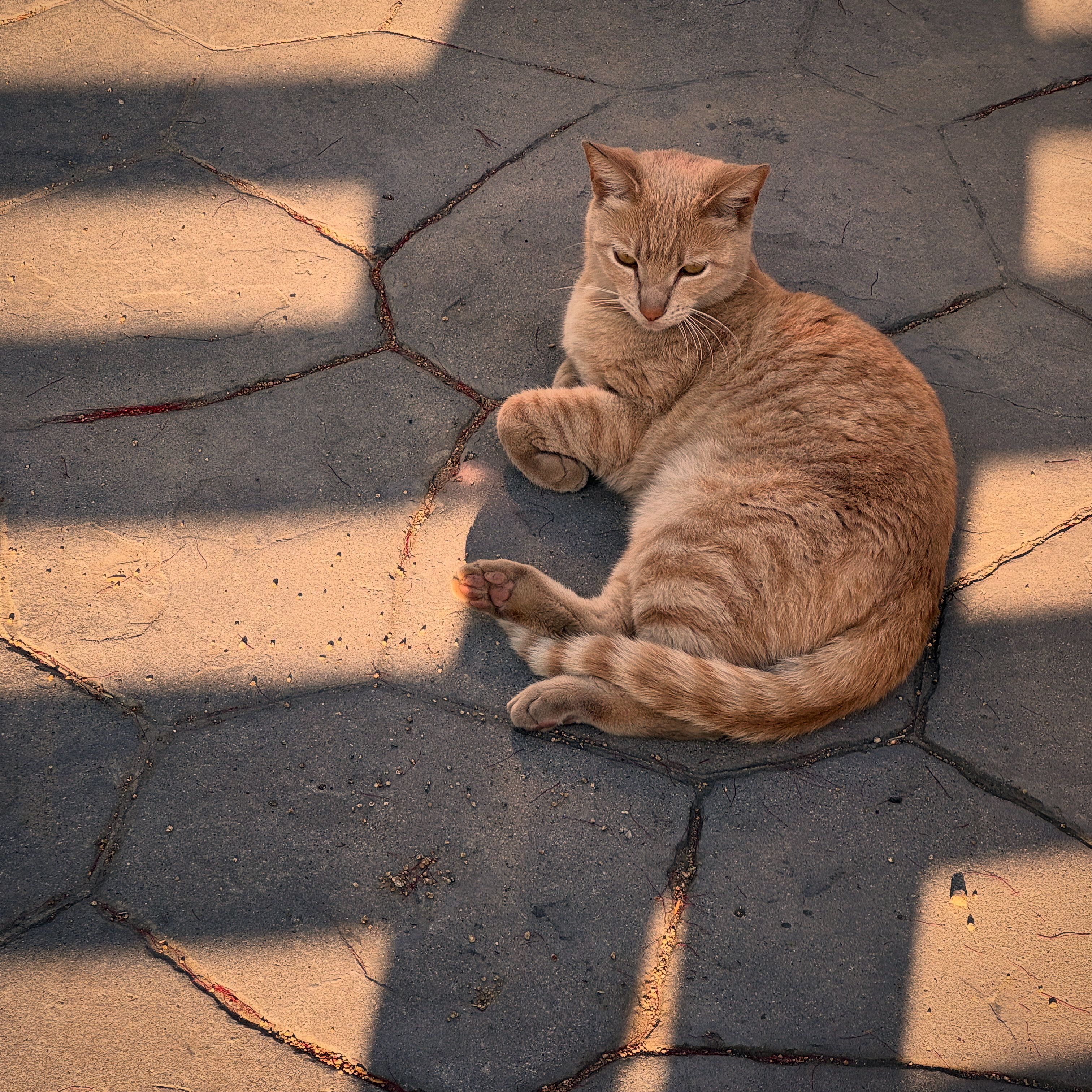
When the plane touched down in San Juan, I went to the hostel, put my suitcase in the small closet, and walked to the colony. Cats climbed and stalked the shore, some the size of small tigers, others scrawny and starved. There were limping cats, matted cats, striped cats, three-legged cats, one-eyed cats, sick cats, cats who startled away from something unseen. A trio of tails swished upright, in sync. The grey one meowed like an unsuspecting lover knifed in the throat. The smallest one coughed. The orange one with green eyes hissed at my shins, fangs gorgeous. David and I had agreed: two children. Year three, I couldn’t continue trying. It wasn’t so much the kids, he said, more like the rest of his life linked to an unpredictable partner.
That night, the waiter asked if I’d come to San Juan alone, and I smiled at him. I thought of the cats clawing him to death. “With my family,” I said, meaning the cats.
I visited the winding path between the sea and the fortress five days, each day staying longer. The grey cat eventually wove figure eights around my ankles, the smallest cat offered her belly. The orange one would not be cajoled out of her caution, becoming my favorite. I sat on the rocks and watched the cats climb and pounce and play, hundreds of them, some seeming to emerge from the sea, others unmoving formations.
It wasn’t just David. I’d arrived at a place in my life where making friends was impossible. It happened gradually and then all at once: I lost the ability to call people back or make plans. I couldn’t stand small talk. Listening, smiling, and responding exhausted me.
I bought a collapsible chair and carried it on my back to the fortress. I waited until the tourists had taken their photos, checked off the boxes on their itineraries, and moved on to whatever distraction they’d pre-booked. I sat inside El Morro, near the arched window someone had cut a century ago into the black stone, in view of the sea. The grey cat leapt into my lap, a dozen cats I hadn’t seen until that night draped their bodies across my feet, my arms, my neck and my shoulders. We slept. When I woke, the moon hung above high tide, pulling and pulling.
In Chicago, I hadn’t even made sense to myself. I read that the antidote to loneliness was not surrounding yourself with people. The answer, the book said, was to accept yourself fully, to commune with every person you had ever been, allowing all those iterations harmonious access to each other.
Day Ten, a woman walked among us, purpose animating her stride. She was part of a movement to rehome the cats. Her group would trap, neuter, and spay the animals, then place flyers all over the city that featured them in languid repose on a wide windowsill, or curled into the crook of a well-dressed child’s arm. I asked the woman if they tracked the health and well-being of the cats once they were removed from the fortress, tamed, and made to live in a way that she and her group deemed respectable. We don’t have the bandwidth for that, the woman said, affronted.
After two weeks, I drove my rental car toward the airport, but found myself two hours later in my collapsible chair near the arched fortress window, the sea shushing, cats peering from eroded nooks in the walls, cats braided into a carpet flung across the cool floor, cats purring against my belly, cats bathing my neck with sandpaper tongues. Three hours after my flight took off without me, I wondered if one of my other selves had boarded the plane and was sitting in my aisle seat. I wondered if the woman would try to trap me, spay me, rehome me. I curled up, tucked my swishing tail to my haunches, certain I would hiss and claw my way out of the clutches of any person who ever again tried to make me behave.
A Ghost Sits on the Edge of Lake Michigan
By Rachel Ashcraft
If you put your ear against the surface of lake Michigan, you might hear it. It sounds like a motorcycle running and it doesn’t. It has that same put-put-put tailpipe cadence, but the timber of it is all sea-life, whistles and pops like a whale singing.
They named it in the ’60s. A lot of things were made into nouns back then with a well-placed article: “The Red Scare,” “The Moon Landing,” and then “The Bloop.” A sound that bubbled up from the depths and reverberated all the way from Chicago to the U.P., like bathwater going down the drain.
They say after “The Bloop” you can ask for things and the lake will give them to you.
Some people like to say “The Bloop” killed us all and that the world hasn’t been right since. I didn’t think I believed them.
I hear it now, head tilted, ear flat against the surface. I close one eye and the lake becomes a never-ending undulating landscape. It smells like iron and tastes fishy. I reach my fingers down, and they stretch farther than they should, and before me, the water dips and caves. I’m somewhere else: a land of stretching sand, dunes, and stars.
I drowned here once in The Before. I always thought the word drowning meant you had died, but “no” they told me later you can drown and live. I had “drowned.” I cannot remember how it happened, only the heat of that day and the lake I loved grabbing my ankle and pulling me down.
I had asked the lake for a friend. It has always been a place that had taken: riptides and undertows, a midwestern ocean that is often underestimated. They tell us not to ask it for anything; that what comes out of it are things of the devil.
***
Alain wobbles from the waves and his human form is solid enough. He talks but I cannot hear him. Only after I push my head against his chest do words reverberate through me, like my skin absorbs part of him.
“Do you know where you came from?” I ask Alain.
His skin, like the water of the lake, rises and falls, almost like breathing. His world was a place of sand, but he had moved through it grain by grain. The images of it ripple across him. Now he pulls the lake around himself like a coat. Water is easier, he tells me, to become.
We meet on the beach daily. In his molecules he plays a film for me starring a handsome French man, his namesake, he says. “We try to learn the planets we conquer.”
“You can do it, too,” he says. “Shed your human skin.” He says he found something of me already down there among the broken ships, and skulls, and other beings who have come to call the lake’s darkest levels home. Fresh water is such a rare commodity. Not just here on earth, but everywhere. “It’s the thing we all love to use up.”
“You can’t ever go home again,” he tells me.
“But I do,” I say. “I go home every night.”
“What is your home like?”
I can’t say. It is dark and deep and still and empty.
“My home world was a desert. Ironic, isn’t it?” he says and maybe laughs as he loses bits of himself, water splashing down around my feet.
I tell him about “The Bloop” and he says that’s when they landed. The one and only time we were supposed to encounter each other. When their ship nestled down into the cold lake water and sank to the bottom.
“The wish goes both ways.” He tells me. “I wished for a friend too and the depths gave me you. I always wanted a friend to see a sunset with.”
I don’t remember the actual time I drowned. I think I was old, though. I tell myself I lived a good long life.
My bones wash up on the shore one day. Alain and I hold each other, my shriveled fingers in his watery ones. I think both of us only exist for the moment that we come together. We’ve willed each other back into being.
My bones wash back out.
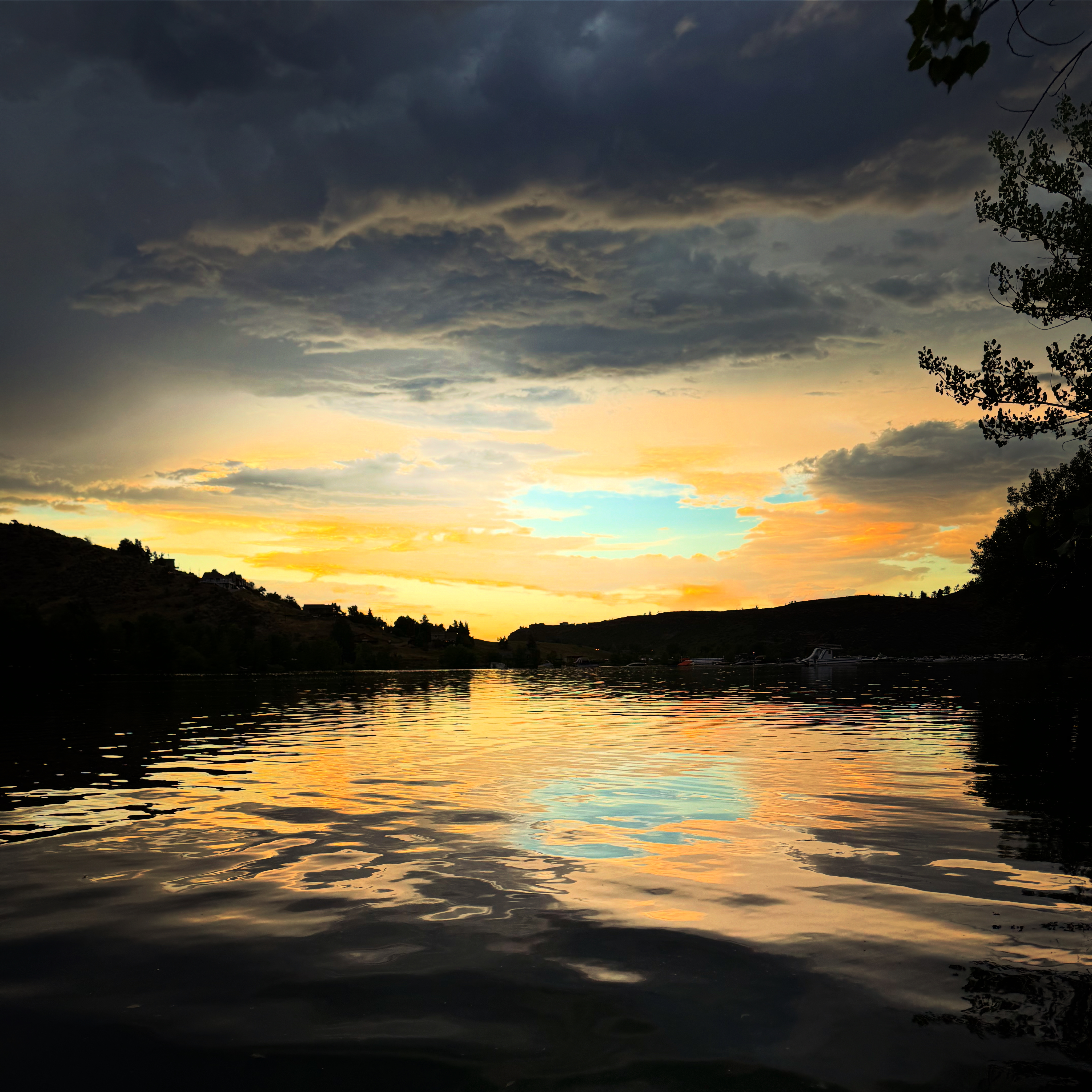
“The sunset,” he says it like a sigh and I hear hints of The Bloop in his exhalation. A sound that settles like a grave as the sun dips and spreads itself thin and bright.
Here, together.
We sit.
We watch.
Men’s Stupidity
By Ann Yuan
That night, Father slept with the cattle to watch the injured calf. He set up a fire pit next to her motionless body. Her leg had doubled in size, yellow liquid seeping out of the wraps and hay coating the wraps like some seasonings. He peeled off the soaked dressing and threw it in the basin I brought from the house. I also brought a blanket and soup. The barn smelled like spoiled meat. The wind whistled between the planks on the wall. I couldn’t feel my toes.
Father bit on an old shirt and tore it into strips. He tied them around the new dressing and limped up to wash his hands in a bucket. The water turned dark red. He draped the blanket over the calf and sat down to have his dinner. The ceramic soup bowl settled between his chest and arms as if he were cuddling a baby. Steam and white breath mixed to a tiny cloud. It was hard to tell what he was thinking.
“He’s a fool,” Mother said, “pretending to be a doctor.” She dumped the bloody dressing in the sink and poured boiled water over it.
I’d heard the story many times: Father self-treated his broken ankle and ended up walking like a penguin. “Only God can heal,” Mother told me. She filled a bed warmer and sent me to sleep.
Before sunrise, I heard Father stomp upstairs and knock on our lodger’s door. “The wound is a cauliflower.” His voice was low. “She’s not gonna make it.”
The young medical student rubbed his eyes, half-asleep and totally puzzled. When he finally understood what Father wanted, he pushed his spectacles upon his nose bridge and said, “I’m a human doctor. I don’t treat animals.”
The vet was located on the other side of the county. The road was frozen mud covered by fresh snow. Father looked at the flakes in the leaden sky and said nothing. He went downstairs and came back with his rifle. He sat cross-legged on the floor and blocked the lodger’s doorway, the gun slanting on his shoulder.
It was funny to see him pout and wait and hope things will go his way. I’d done that before. Mother usually left me alone. She said I could sit there until my butt gouged out a groove on the wood floor. Once, when I picked the wrong time, she ended my protest with a whack on the top of my head. And now, with her hands on her hips and flour on her hands, she stood in the kitchen scowling at the stairway, face dark and firm like a rock. I wouldn’t dare to make a sound.
Father stayed at his post until the student doctor gave in, only because he couldn’t hold the pee anymore and certainly couldn’t go inside a room like a dog. We all went to the barn and saw a needle jabbing in the calf’s shoulder. Several hours later, the calf lifted her head looking for her mother. Father fed her milk. He told me to keep feeding and then walked out to his car. He said he would go to the police to report himself.
“What kind of approval do you need?” Mother ran out after him and yelled.
“I don’t know,” he said. “Men’s stupidity?”
I would never believe he was capable of saying that. It sounded like something written in a book. The truth is, not only did he say that, he also served three months in jail for menacing. I guess it is pretty stupid to ask for punishment when there is no harm done. During that time, Mother told the ankle story again. The conclusion was still “He’s a fool.” But this time she added, “We all are.”
DRY EYES
By Anamika Emaye
The ambulance smells of Dettol and saltwater. She sits there, frozen. The sheet that is covering his body keeps slipping as the driver swerves, avoiding each pothole. Her expensive designer cover-up clings damply to her back. Red and white chooda bangles jangle when the van takes a sharp turn. One, she notices, is cracked. Her sindoor has trickled down her forehead like blood.
She watches herself on the phone screen of the orderly sitting next to her. He is glued to the news with voyeuristic concentration. A clip from earlier flashes on loop. Of her running towards the fishermen pulling out his body from between the rocks. Then their wedding photos, pulled from Facebook albums, flash across the screens, sharing space with Jungle Rummy advertisements.
Heartbroken bride loses love of her life in parasailing accident
Government promises stricter safety protocols.
Chief Minister offers condolences to grieving widow.
Someone offers her a bottle of water. She doesn’t open it. Her throat is dry, but the thought of swallowing anything makes her stomach twist. She hasn’t spoken since the beach. Not when they lifted his body into the ambulance, not when the tour guide collapsed in tears, out of fear. Not when the policeman asked if she wanted to call someone. Not when the crowd gathered around the scene, pointing their phone cameras at her.
She had been married eleven days. Three months of stilted video calls, awkward silences, time zone adjustments. And then the wedding with two thousand guests and a week of festivities.
Goa was supposed to be the beginning, not the end. She had dreamed of long conversations, slow mornings and the awkward sweetness of discovering the man beneath the groom. The man in the uncomfortable sherwani who had smiled shyly at her on their wedding day.
The lingerie she packed still has the tags on. They have dinner reservations for tonight in that place Instagram said served the best crab. They have a couple massage booked for tomorrow.
And now she’s trending on Twitter. A hashtag.
She should cry. She’s trying to. Her eyes sting from the effort. Her chest feels hollow, like someone has scooped out everything inside and left a vacuum. She should cry. But not for him. She has no memories to hold. No private jokes. No shared glances. Just wedding photos—posed, bright, choreographed to perfection. Meaningless.
But guilt is what consumes her. The cold, creeping guilt of being seen as something she is not. Other than that, she feels nothing. Just the cold, encroaching horror of her own life, over before it began. She’ll always be the one who lost her husband on her honeymoon.
People on the internet have generated Ghibli images of her wedding photos and are sharing them with broken heart emojis. They say she’s lost the love of her life. But she hasn’t even lost a love. Just the possibility of one. A stranger died. A stranger she might have grown to love. Or not. A man who was kind enough, decent enough, and now he’s gone.
She should cry, but not for him.
Her tears should be for her life that would never be the same again. For the stigma that will follow her like a shadow. For the way every second conversation will shift and hushed whispers will follow her everywhere. Oh, she’s the one. For the way mothers will now hesitate to consider her for their sons.
As the ambulance nears the hospital someone hands her a dupatta and she wraps it around herself. She takes a deep breath and summons a tear.
Reporters have already gathered, cameras poised like machine guns. She rehearses a look in her mind—a mix of devastation and composure. It takes effort to produce that expression. She doesn’t want to be misunderstood. Not out of coldness or pretence. Just necessity. She knows she has to look the part.
And what would she say?
“I didn’t really know him”?
“I feel nothing”?
No, she will just cry. She will face the cameras and cry for the life that’s been taken from her. Hers.
 BRILLIANT FLASH FICTION